
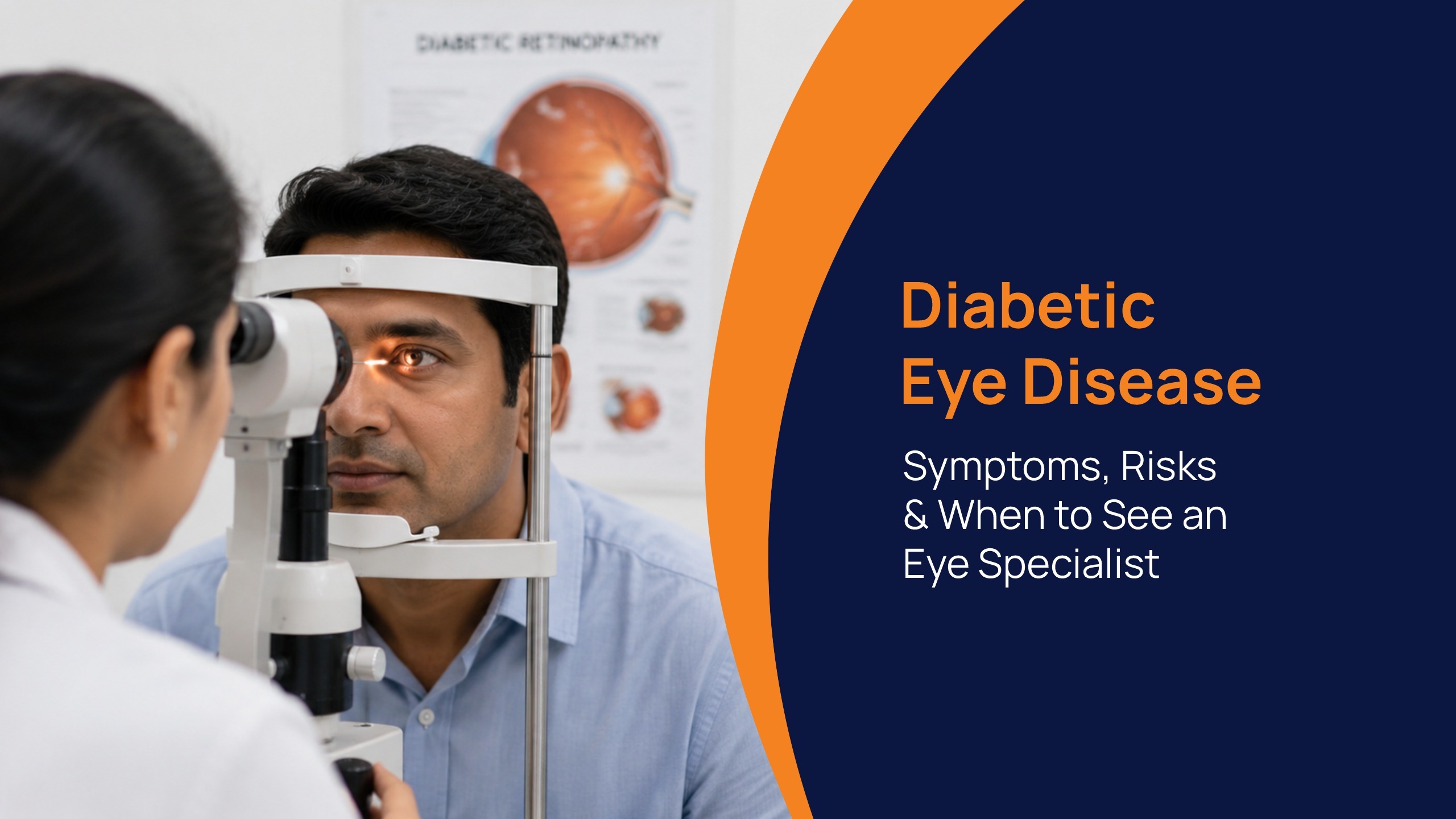
If you have diabetes, you’re probably already careful about monitoring your blood sugar, taking your medicines, and following a healthy diet. But there’s one part of diabetes care that’s often overlooked, your eyes.
The challenge with diabetic eye disease is that it usually develops silently. In its early stages, you may not notice any changes in your vision, which can create a false sense of security. By the time symptoms become obvious, the condition may have already affected your eyesight.
The good news is that most diabetes-related eye problems can be detected early through regular eye check-ups. Knowing the warning signs and getting your eyes examined on time can go a long way in protecting your vision.
What Is Diabetic Eye Disease?
Diabetic eye disease is a group of eye conditions that can develop as a result of diabetes. The most common is diabetic retinopathy, which affects the tiny blood vessels in the retina, the light-sensitive tissue at the back of the eye that helps you see clearly.
Diabetes can also increase the risk of other eye problems, such as diabetic macular edema, cataracts, and glaucoma. While these conditions differ, they all have one thing in common: over time, high blood sugar can damage the delicate structures of the eye if it’s not well controlled.
How Does Diabetes Affect Your Eyes?
Think of the retina as the camera sensor of your eye. It captures light and sends signals to the brain, allowing you to see clearly.
When blood sugar remains high for a long time, the tiny blood vessels that nourish the retina become weak. They may leak fluid, swell, or become blocked. In some cases, new abnormal blood vessels grow, but these are fragile and can bleed easily.
The important thing to remember is that this damage usually develops gradually. That’s why many people with diabetic eye disease continue to see normally in the early stages without realizing anything is wrong.
Early Symptoms You Should Never Ignore
One of the biggest challenges with diabetic eye disease is that it may not cause symptoms in the beginning. This is why routine eye screening is so important.
As the condition progresses, you may notice:
- Blurred or fluctuating vision
- Floaters or dark spots in your vision
- Difficulty reading or focusing on fine details
- Poor vision at night
- Colours appearing dull or faded
- Sudden or partial loss of vision
Even if these symptoms seem mild or come and go, don’t ignore them. Any change in your vision deserves a prompt evaluation by an eye specialist.
Who Is at Higher Risk?
Not everyone with diabetes develops diabetic eye disease, but certain factors can increase the risk.
You may be more likely to develop eye complications if you:
- Have had diabetes for several years
- Find it difficult to keep your blood sugar under control
- Have high blood pressure or high cholesterol
- Smoke
- Are pregnant and have diabetes
Having one or more of these risk factors doesn’t mean you’ll definitely develop diabetic eye disease. It simply means that regular eye check-ups become even more important.
Why Regular Retina Check-ups Matter
Many people wait until they notice blurred vision before visiting an eye doctor. Unfortunately, with diabetic eye disease, waiting for symptoms isn’t always the best approach.
A dilated eye examination allows your ophthalmologist to examine the retina in detail and detect early signs of damage, often before you notice any change in your eyesight.
Finding the problem early usually means treatment can begin sooner, helping reduce the risk of vision loss. For most people living with diabetes, an annual retina check-up is an essential part of long-term diabetes care.
How Is Diabetic Eye Disease Diagnosed?
If your ophthalmologist suspects diabetic eye disease, they may recommend a few simple tests to understand the health of your retina.
These may include:
- A comprehensive vision assessment
- A dilated eye examination
- Retina imaging
- Optical Coherence Tomography (OCT) to look for swelling in the retina
- Fluorescein angiography, if a closer look at the retinal blood vessels is needed
These tests are painless and part of our broader diagnostic services, helping your doctor decide whether treatment or regular monitoring is required.
Can Diabetic Eye Disease Be Treated?
Yes. While damaged retinal tissue cannot always be restored, early diagnosis and timely treatment can slow or stop further damage and help preserve vision.
Treatment depends on the stage of the disease and may include:
- Better blood sugar management
- Medicines injected into the eye to reduce swelling
- Laser treatment to treat damaged blood vessels
- Surgery in advanced cases where bleeding or retinal damage has become severe
The earlier treatment begins, the better the chances of protecting your eyesight.
Tips to Protect Your Vision
Looking after your eyes is an important part of managing diabetes.
Simple steps include:
- Keep your blood sugar within the target range recommended by your doctor
- Control your blood pressure and cholesterol
- Eat a balanced diet and stay physically active
- Avoid smoking
- Never skip your annual diabetic eye examination, even if your vision seems normal
Small, consistent habits today can help protect your vision in the years ahead.
Eye Care at Terna Speciality Hospital
At Terna Speciality Hospital & Research Centre, our Ophthalmology team provides comprehensive diabetic eye screening, advanced retinal evaluation, and personalised treatment for diabetes-related eye conditions. Working closely with our diabetes specialists, we focus on early diagnosis and timely care to help patients protect their vision and maintain long-term eye health.
Final Thoughts
Diabetic eye disease rarely announces itself early, which is exactly what makes it worth watching for even when your vision feels fine. If you have diabetes and haven’t had a dilated eye exam in the past year, or you’ve noticed any changes in your vision, book a comprehensive diabetic eye check-up with the Ophthalmology team at Terna Speciality Hospital & Research Centre for early detection and timely treatment.
Visit the eye specialist at Terna Hospital, Navi Mumbai. Enquire now and consult our specialists.
Still have lingering questions? Let’s address the most common ones patients ask.
Can diabetic eye disease be reversed?
Early changes can often be stabilized or slowed with good blood sugar control and timely treatment, but advanced retinal damage usually can’t be fully reversed, which is why early detection matters.
Does every diabetic patient develop eye disease?
No. Not everyone with diabetes develops diabetic eye disease, but the risk increases the longer someone has diabetes and how well their blood sugar is controlled.
How often should diabetics get an eye exam?
Most people with diabetes should get a dilated eye exam at least once a year, though your ophthalmologist may recommend more frequent checks depending on your risk factors
Can diabetic eye disease cause blindness?
In advanced, untreated cases it can lead to significant vision loss, but with regular screening and timely treatment, most people preserve useful vision.
What is diabetic retinopathy?
Diabetic retinopathy is the most common form of diabetic eye disease, caused by damage to the blood vessels in the retina due to prolonged high blood sugar.
Disclaimer: The information provided on this blog is for general educational purposes only and should not be considered a substitute for professional medical advice, diagnosis, or treatment. Always consult a qualified healthcare professional for advice.