
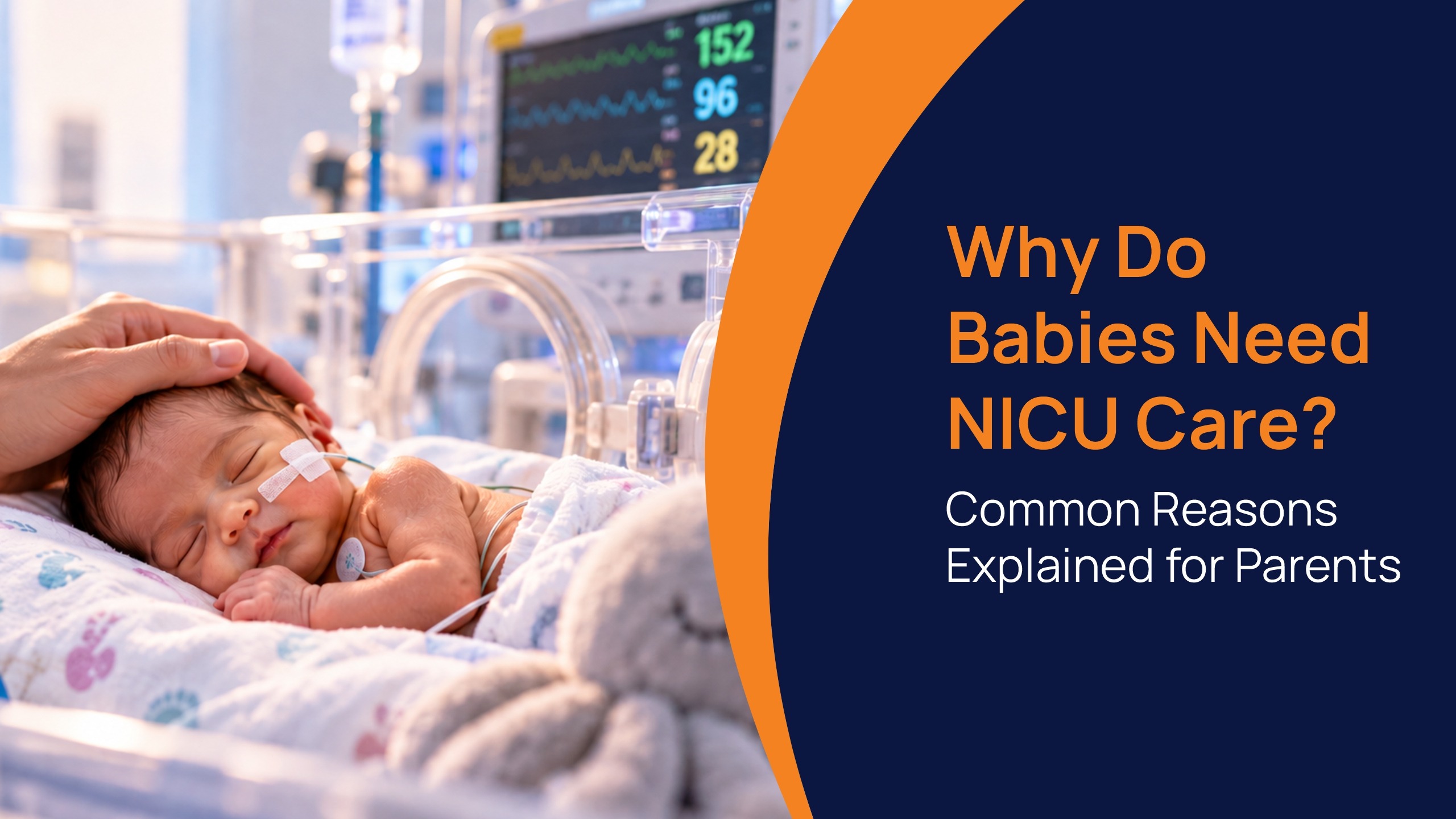
A newborn may need specialised medical care if they are born prematurely, have difficulty breathing, have a low birth weight, develop an infection or need close monitoring after birth. Understanding why babies need NICU care can help parents know what to expect if their newborn requires additional medical support.
A Neonatal Intensive Care Unit (NICU) provides specialised neonatal intensive care for newborns who require medical treatment, monitoring or additional support.
At Terna Speciality Hospital & Research Centre, Navi Mumbai, the Level III NICU provides care for premature and critically ill newborns, with incubators, ventilators and monitoring systems supported by specialized neonatologists and pediatric healthcare professionals.
What Is a NICU?
A Neonatal Intensive Care Unit (NICU) is a specialised unit for newborn babies who need additional medical support or close observation.
NICU care for newborns may include:
- Monitoring of breathing, heart rate and oxygen levels
- Temperature support
- Feeding assistance
- Blood sugar monitoring
- Medicines and intravenous fluids
- Respiratory support
- Treatment for infections or jaundice
The type and level of newborn intensive care depends on the baby’s medical condition and individual needs.
Why Do Babies Need NICU Care?
There are several reasons for NICU admission. Some babies require intensive care because of prematurity or medical complications, while others may need temporary monitoring or support after birth.
1. Premature Birth
Babies born before 37 weeks of pregnancy may need additional support because their breathing, feeding and temperature regulation may not yet be fully developed.
Depending on their maturity and medical condition, some premature babies may require premature baby NICU care and close monitoring.
2. Low Birth Weight
Some babies with low birth weight may require closer monitoring of their temperature, feeding, blood sugar and overall health.
Low birth weight alone does not always mean that a baby needs NICU admission. The decision depends on the baby’s overall condition.
3. Breathing Problems
Some newborns have difficulty breathing after birth due to prematurity, respiratory conditions, infection or other complications.
Depending on the severity, they may require oxygen, respiratory support or continuous monitoring in the NICU.
4. Infections
Newborn infections may require prompt evaluation, monitoring and treatment.
Some babies may need antibiotics, intravenous fluids or other supportive care as part of their neonatal intensive care.
5. Feeding Difficulties
Premature or unwell babies may not be able to breastfeed safely or effectively at first.
They may temporarily require expressed breast milk through a feeding tube or other nutritional support until they are able to feed independently.
6. Jaundice
Jaundice is common in newborns, but some babies develop bilirubin levels that require treatment and closer monitoring.
Depending on the baby’s condition, treatment may include phototherapy.
7. Low Blood Sugar
Certain newborns may be at increased risk of low blood sugar and may require blood glucose monitoring, feeding support or medical treatment.
8. Complications Around Birth
Babies who experience complications during labour or delivery, require significant resuscitation or have other medical concerns may need observation and specialised neonatal care.
9. Congenital Conditions
Some babies are born with conditions affecting the heart, lungs or other organs and may need specialised assessment, monitoring or treatment after birth.
Does Every Premature Baby Need NICU Care?
No.
The need for NICU care depends on factors such as the baby’s gestational age, birth weight, breathing, feeding ability, temperature, blood sugar and overall health.
Some premature babies require intensive care, while others may need less intensive monitoring or specialised care outside the NICU.
What Happens in a NICU?
During NICU care for newborns, the neonatal team closely monitors the baby’s condition and provides treatment according to their needs.
This may include:
- Monitoring vital signs
- Supporting breathing
- Maintaining body temperature
- Providing feeding support
- Treating infections
- Managing jaundice
- Giving medicines or fluids when required
The care plan may change as the baby becomes more stable and progresses toward discharge.
How Long Does a Baby Stay in the NICU?
There is no fixed NICU stay for every baby.
The length of stay depends on the reason for admission, gestational age, medical condition and response to treatment.
Before discharge, the medical team generally assesses whether the baby is medically stable and able to feed and maintain body temperature appropriately.
Can Parents Visit Their Baby in the NICU?
Parents are encouraged to remain involved in their baby’s care whenever medically appropriate.
Depending on the baby’s condition and hospital policies, parents may be able to:
- Touch or hold the baby
- Provide expressed breast milk
- Participate in feeding
- Provide skin-to-skin or kangaroo care when advised
Parents should follow the NICU team’s instructions regarding hygiene, visitation and handling of the baby.
NICU in Navi Mumbai: Care at Terna Speciality Hospital & Research Centre
Terna Speciality Hospital & Research Centre, Navi Mumbai has a Level III NICU for premature and critically ill newborns.
According to Terna’s official information, the NICU is equipped with incubators, ventilators and monitoring systems, with specialised neonatologists and nurses providing neonatal care.
Terna’s Paediatrics department also provides newborn and neonatal care, supported by doctors with expertise in Paediatrics and Neonatology.
The neonatal team works with parents to understand the baby’s condition, provide appropriate treatment and monitor progress throughout the hospital stay.
When Should Parents Seek Medical Attention?
Parents should seek prompt medical attention if a newborn develops:
- Difficulty breathing
- Bluish or grey skin or lips
- Significant feeding difficulties
- Unusual sleepiness or difficulty waking
- Fever or abnormally low temperature
- Repeated vomiting
- Seizures
- A sudden or significant change in condition
Newborns can become unwell quickly, so medical advice should be sought promptly when concerns arise.
Final Takeaway
Understanding why babies need NICU care can help parents feel more prepared if their newborn requires specialised medical attention.
Common reasons for NICU admission include prematurity, breathing difficulties, low birth weight, infections, feeding problems, jaundice, low blood sugar and complications around birth.
NICU care provides specialised monitoring and treatment during the early days of life when a newborn may need additional support.
At Terna Speciality Hospital & Research Centre, Navi Mumbai, the Level III NICU provides specialised care for premature and critically ill newborns.
Consult Terna Speciality Hospital & Research Centre
If your newborn requires specialised assessment, monitoring or treatment, consult the Paediatrics and Neonatology team at Terna Speciality Hospital & Research Centre, Navi Mumbai.
Expert care for newborns and children at Terna Hospital, Navi Mumbai. Enquire now and consult our neonatologist and paediatrician for your child’s health and well-being.
Still have lingering questions? Let’s address the most common ones patients ask.
Why do babies need NICU care?
Babies may need NICU care because of prematurity, breathing difficulties, low birth weight, infections, feeding problems, jaundice, low blood sugar, complications around birth or certain congenital conditions.
Does NICU admission mean my baby is critically ill?
Not always. Some babies need NICU care for newborns for close monitoring or temporary medical support, while others may require more intensive treatment.
Does every premature baby need NICU care?
No. The need for NICU admission depends on the baby’s gestational age, breathing, feeding, temperature, overall health and other medical needs.
How long will my baby stay in the NICU?
There is no standard duration. The length of stay depends on the reason for admission, the baby’s medical condition and how well the baby responds to treatment.
Can parents hold a baby in the NICU?
Parents may be able to hold their baby or provide skin-to-skin contact when the baby is stable and the medical team considers it appropriate.
What is premature baby NICU care?
Premature baby NICU care involves specialized monitoring and support for babies born before 37 weeks who may need help with breathing, feeding, maintaining body temperature, or other aspects of newborn care.
Disclaimer: The information shared in this content is for educational purposes only and not for promotional use.