
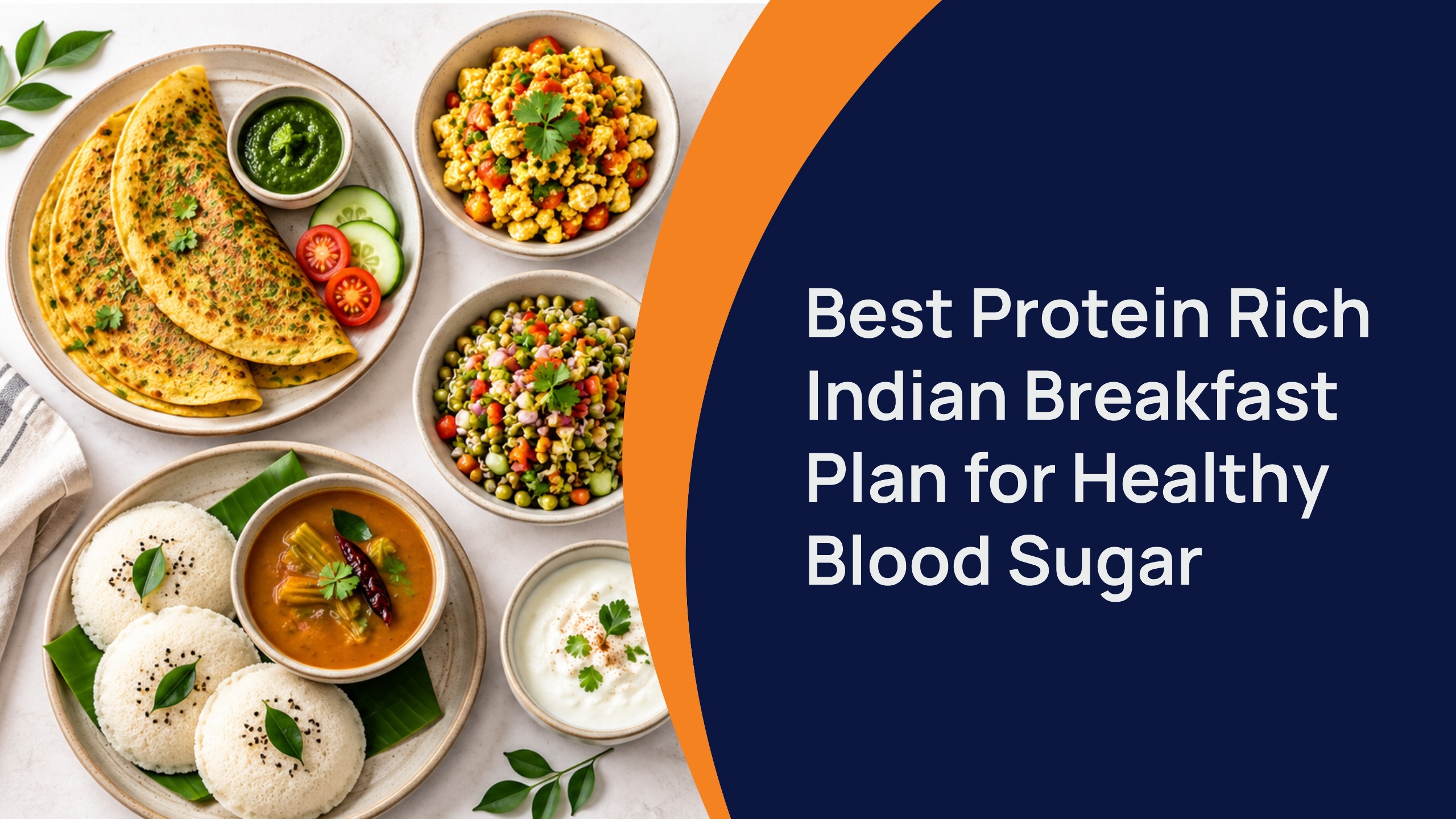
Breakfast can set the tone for the rest of your day. If your morning meal is mostly made up of refined carbohydrates or added sugar, you may feel hungry again soon after eating. A breakfast that includes protein, fibre and suitable carbohydrates can be more filling and make your meal more balanced.
The good news is that you don’t need expensive ingredients or a completely different diet. Many familiar Indian foods can be combined to make a protein-rich Indian breakfast that fits easily into your everyday routine.
Why Is Protein Important at Breakfast?
Protein helps you feel full and satisfied after a meal. When paired with fibre-rich foods and appropriate portions of carbohydrates, it can make breakfast more balanced.
This does not mean you need to completely avoid carbohydrates. Foods such as grains, pulses and fruits can still be part of a healthy diet. The focus should be on the overall combination and portion.
For example, instead of having plain bread with sweet tea, you could choose whole-wheat bread with paneer or eggs and add some vegetables.
What Should a Healthy Breakfast for Blood Sugar Include?
A simple way to build your breakfast is to think about three things:
Protein + Fiber + Appropriate carbohydrates
1. Add a Protein Source
Depending on your food preferences, options can include:
- Moong dal
- Besan
- Paneer
- Curd or unsweetened yogurt
- Sprouts
- Chana
- Tofu
- Eggs, if you eat them
- Milk without added sugar
The amount of protein you need depends on your age, health, activity level and medical conditions. People with diabetes or kidney problems, for example, may have different dietary requirements. A doctor or qualified dietitian can help you determine what is appropriate for you.
2. Include Fibre-Rich Foods
Vegetables, pulses, whole grains, nuts and seeds can add fibre to your breakfast.
For instance, adding spinach, tomato, onion or capsicum to a besan chilla can make a simple breakfast more nutritious and filling.
3. Be Careful With Added Sugar and Refined Foods
Biscuits, sweetened cereals, sugary drinks, white bread and other highly refined foods can add carbohydrates and sugar without providing much protein or fibre.
You don’t need to completely change everything overnight. Small swaps can make your usual breakfast more balanced.
7 Protein-Rich Indian Breakfast Ideas
1. Moong Dal Chilla With Curd
Moong dal chilla is a simple way to include plant-based protein at breakfast. Pair it with plain, unsweetened curd and some vegetables.
2. Vegetable Besan Chilla With Paneer
Add chopped vegetables such as spinach, tomato, onion or capsicum to besan batter. A suitable portion of paneer can provide additional protein.
3. Vegetable Oats Upma With Curd
Oats can be cooked with vegetables and paired with plain curd. Keep the portion appropriate and avoid adding sugar.
4. Sprouts Chaat With Curd
Combine sprouts with cucumber, tomato, coriander and lemon. Plain curd can be added if you want additional protein.
5. Paneer Vegetable Sandwich
Use whole-wheat or whole-grain bread with paneer and plenty of vegetables. Avoid making the sandwich heavy with sugary sauces or large amounts of spreads.
6. Idli With Sambar
You don’t necessarily have to give up familiar foods such as idli. Pairing idli with sambar adds pulses and vegetables to the meal. Portion size still matters, particularly when managing blood sugar.
7. Eggs With Whole-Grain Toast and Vegetables
For people who eat eggs, eggs with whole-grain toast and vegetables can be a simple and filling breakfast option.
What About Your Morning Tea or Coffee?
You don’t necessarily have to give up your morning tea or coffee.
The amount of sugar added to the drink is worth paying attention to. If you regularly add several teaspoons of sugar, reducing it gradually may be easier than trying to stop suddenly.
Also look at what you eat with your tea. Biscuits, rusk and other packaged snacks can add extra refined carbohydrates to your morning meal.
A Simple 7-Day Breakfast Plan
|
Day |
Breakfast |
|
Monday |
Moong dal chilla + plain curd |
|
Tuesday |
Vegetable besan chilla + paneer |
|
Wednesday |
Vegetable oats upma + curd |
|
Thursday |
Sprouts chaat + plain curd |
|
Friday |
Paneer vegetable sandwich |
|
Saturday |
Idli + sambar + vegetables |
|
Sunday |
Eggs + whole-grain toast + vegetables |
This is a general example, not a personalised diabetes meal plan. Portion sizes and food choices may need to be adjusted according to your blood sugar levels, medicines, activity level and other health conditions.
Simple Breakfast Habits That Can Help
You don’t have to completely change your eating habits at once. Start with a few practical changes:
- Include a protein source in your breakfast.
- Add vegetables or another fibre-rich food.
- Choose unsweetened tea or coffee where possible.
- Limit biscuits and other highly refined breakfast foods.
- Pay attention to portion sizes.
- Avoid regularly adding large amounts of sugar to food and drinks.
- Follow the meal plan recommended by your healthcare professional if you have diabetes.
When Should You Talk to a Doctor or Dietitian?
If you have diabetes or prediabetes, your breakfast is only one part of your overall blood sugar management.
Your dietary needs can vary depending on your medicines, blood sugar levels, weight goals, physical activity and other health conditions. A meal that works well for one person may not be suitable for another.
If you’re unsure about what to eat or are finding it difficult to manage your blood sugar, a diabetologist or qualified dietitian can help you develop a plan suited to your needs.
Diabetes Care at Terna Speciality Hospital & Research Centre
Terna Speciality Hospital & Research Centre, Navi Mumbai is a multispecialty hospital that includes Diabetology among its specialties. The hospital provides patient-focused healthcare across multiple medical disciplines.
If you have concerns about your blood sugar, diabetes management, or your everyday food choices, consulting a healthcare professional can help you make dietary changes that are appropriate for your individual health needs.
Final Takeaway
A protein-rich Indian breakfast doesn’t have to be complicated. Familiar foods such as moong dal, besan, paneer, curd, sprouts, eggs and vegetables can be combined in different ways to create satisfying meals.
There is no single breakfast that is perfect for everyone. The goal is to choose meals that fit your health needs, food preferences and daily routine.
If you have diabetes, prediabetes or concerns about your blood sugar, speak with a qualified healthcare professional before making major changes to your diet.
Consult Terna Speciality Hospital & Research Centre.
If you need guidance with diabetes management or healthier food choices, consult the Diabetology team at Terna Speciality Hospital & Research Centre, Navi Mumbai.
Visit the Internal Medicine Specialist at Terna Hospital, Navi Mumbai. Enquire now or book your appointment.
Still have lingering questions? Let’s address the most common ones patients ask.
What is a good protein-rich Indian breakfast for diabetes?
Moong dal chilla with curd, besan chilla with paneer, sprouts with curd, or eggs with vegetables can be suitable protein-rich breakfast options. The right choice and portion depend on individual health needs.
Is a high-protein breakfast good for blood sugar?
A balanced breakfast containing protein and fibre can help with fullness and may support better overall blood sugar management. The amount of protein should be appropriate for your individual health needs.
Can I eat poha if I have diabetes?
Poha can be included as part of a balanced meal. Portion size and preparation matter, and adding vegetables and an appropriate protein source can make the meal more balanced.
Is idli good for people with diabetes?
Idli can be included in a balanced diet. Having it with sambar and vegetables rather than eating a large portion of idli alone can provide a more balanced meal.
Should I completely avoid carbohydrates at breakfast?
Not necessarily. Carbohydrates can be part of a healthy diet. Choosing less-refined, fibre-rich options and combining them with protein can help create a more balanced meal.
Disclaimer: The information provided on this blog is for general educational purposes only and should not be considered a substitute for professional medical advice, diagnosis, or treatment. Always consult a qualified healthcare professional for advice.