
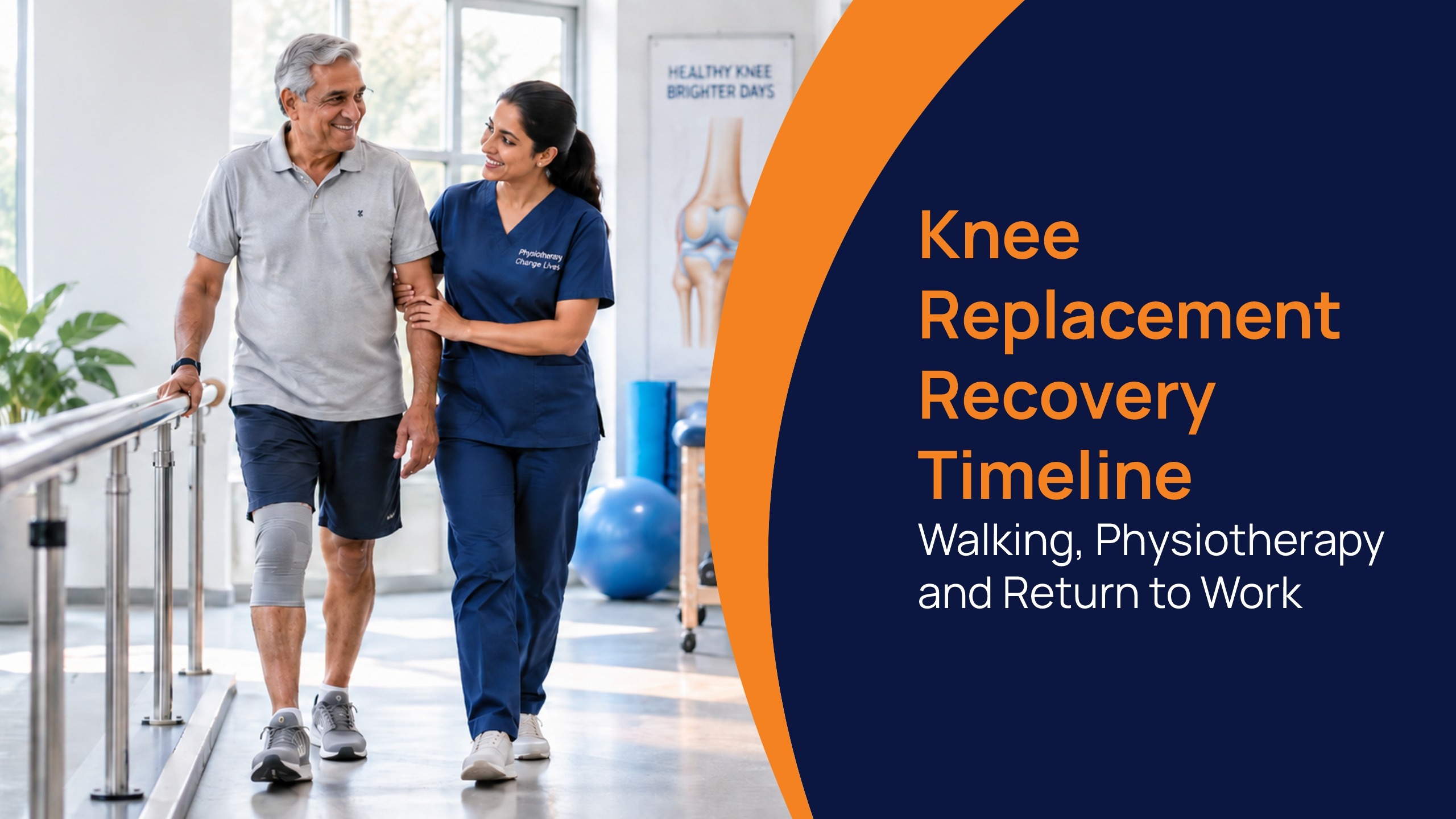
Knee replacement surgery can help reduce persistent knee pain and improve mobility when severe joint damage affects daily activities. However, knee replacement recovery continues for weeks and months after surgery.
A typical knee replacement recovery timeline includes gradually increasing movement, walking, physiotherapy, and returning to daily activities. Recovery varies between patients depending on overall health, muscle strength, type of surgery, and progress with rehabilitation.
When Can You Walk After Knee Replacement?
Walking after knee replacement usually begins soon after surgery, often within the first day when medically appropriate.
Initially, you may need a walker, crutches, or another walking aid. As your strength, balance, and confidence improve, your physiotherapist may gradually reduce your dependence on walking support.
The exact timing varies, so follow your surgeon’s and physiotherapist’s advice rather than comparing your recovery with someone else’s.
Knee Replacement Recovery Timeline
First Few Days
The early stage of recovery after knee replacement surgery focuses on:
- Managing pain and swelling
- Safe movement and walking
- Basic knee exercises
- Preventing complications
- Starting physiotherapy
First 2–6 Weeks
During this period, many patients gradually become more independent with daily activities.
Knee replacement physiotherapy generally focuses on:
- Improving knee movement
- Strengthening the leg muscles
- Improving walking ability
- Developing balance and coordination
- Performing everyday movements safely
Some swelling and stiffness may still occur, particularly after physical activity.
Around 6–12 Weeks
As strength and mobility improve, many patients can gradually return to more everyday activities.
Your healthcare team may advise you to increase walking and other activities progressively while continuing your prescribed exercises.
Three Months and Beyond
Knee replacement rehabilitation can continue for several months. Strength, flexibility, endurance and confidence with movement may continue to improve with regular exercises and appropriate activity.
Some patients take longer to reach their individual recovery goals.
Why Is Physiotherapy Important After Knee Replacement?
Knee replacement physiotherapy helps restore knee movement, muscle strength and functional mobility after surgery.
Your physiotherapist may recommend exercises to improve:
- Knee flexibility
- Leg strength
- Balance
- Walking ability
- Everyday functional movements
Following your prescribed exercise program consistently can support recovery. Avoid starting strenuous exercises independently, as activities should match your stage of rehabilitation.
When Can You Return to Work After Knee Replacement?
Return to work after knee replacement depends on your recovery and the physical demands of your job.
People with desk-based work may be able to return earlier than those whose jobs involve prolonged standing, walking, climbing, lifting, or physical labor.
Your doctor may consider:
- Pain and swelling
- Knee movement
- Walking ability
- Muscle strength
- Your job’s physical requirements
There is no single return-to-work date that applies to everyone. Your surgeon can help determine when you are ready.
What Activities Should You Avoid During Recovery?
During knee replacement rehabilitation, your orthopedic team may advise you to avoid activities that place excessive stress on the healing knee surgery or ligament injury, particularly during the early stages.
These may include:
- Running
- Jumping
- High-impact exercise
- Heavy lifting
- Sudden twisting movements
Low-impact activities can usually be introduced gradually when your healthcare team considers them appropriate.
When Should You Contact Your Doctor?
Contact your orthopedic specialist if you develop:
- Increasing or severe pain
- Increasing redness or drainage from the wound
- Persistent fever
- Significant swelling
- Sudden worsening of mobility
- Calf pain or swelling
Seek urgent medical attention for sudden chest pain, severe breathing difficulty, or other serious symptoms.
Knee Replacement Surgery in Navi Mumbai
For patients considering knee replacement surgery in Navi Mumbai, appropriate evaluation is important to determine whether surgery is suitable and what type of treatment may be required.
At Terna Speciality Hospital & Research Centre, Navi Mumbai, the orthopedic team provides evaluation and treatment for knee conditions and guides patients through surgical care and rehabilitation when knee replacement is recommended.
Recovery planning may include physiotherapy, exercises, mobility guidance and follow-up based on individual needs.
Final Takeaway
The knee replacement recovery timeline varies from person to person. Walking soon after surgery, prescribed physiotherapy, strengthening exercises, and gradual return to daily activities are important parts of recovery.
Following an individualized knee replacement rehabilitation plan and attending follow-up appointments can help support safe and progressive recovery.
Consult Terna Speciality Hospital & Research Centre.
If persistent knee pain or reduced mobility is affecting your daily life, consult the Orthopaedics team at Terna Speciality Hospital & Research Centre, Navi Mumbai, to discuss your condition and available treatment options.
Visit the team of best orthopedics and physiotherapists at Terna Hospital, Navi Mumbai. Enquire now and consult our specialists.
Still have lingering questions? Let’s address the most common ones patients ask.
How soon can I walk after knee replacement?
Many patients begin walking after knee replacement with assistance within the first day when medically appropriate. The exact timing depends on individual recovery and your healthcare team’s advice.
How long does knee replacement recovery take?
Knee replacement recovery varies between individuals. Many patients make significant progress during the first 6–12 weeks, while strength, mobility, and function can continue improving for several months.
Is physiotherapy necessary after knee replacement?
Knee replacement physiotherapy is an important part of rehabilitation for many patients. It can help improve knee movement, strength, walking ability, and everyday function.
When can I return to work after knee replacement?
Return to work after knee replacement depends on your recovery and the type of work you do. Desk-based work may allow an earlier return than physically demanding work. Your surgeon can advise you based on your progress.
Can I drive after knee replacement?
The timing depends on factors such as which knee was operated on, your ability to control the vehicle and your doctor’s advice. Do not drive until you can safely control the vehicle and have been cleared to do so.
Disclaimer: The information provided on this blog is for general educational purposes only and should not be considered a substitute for professional medical advice, diagnosis, or treatment. Always consult a qualified healthcare professional for advice.