
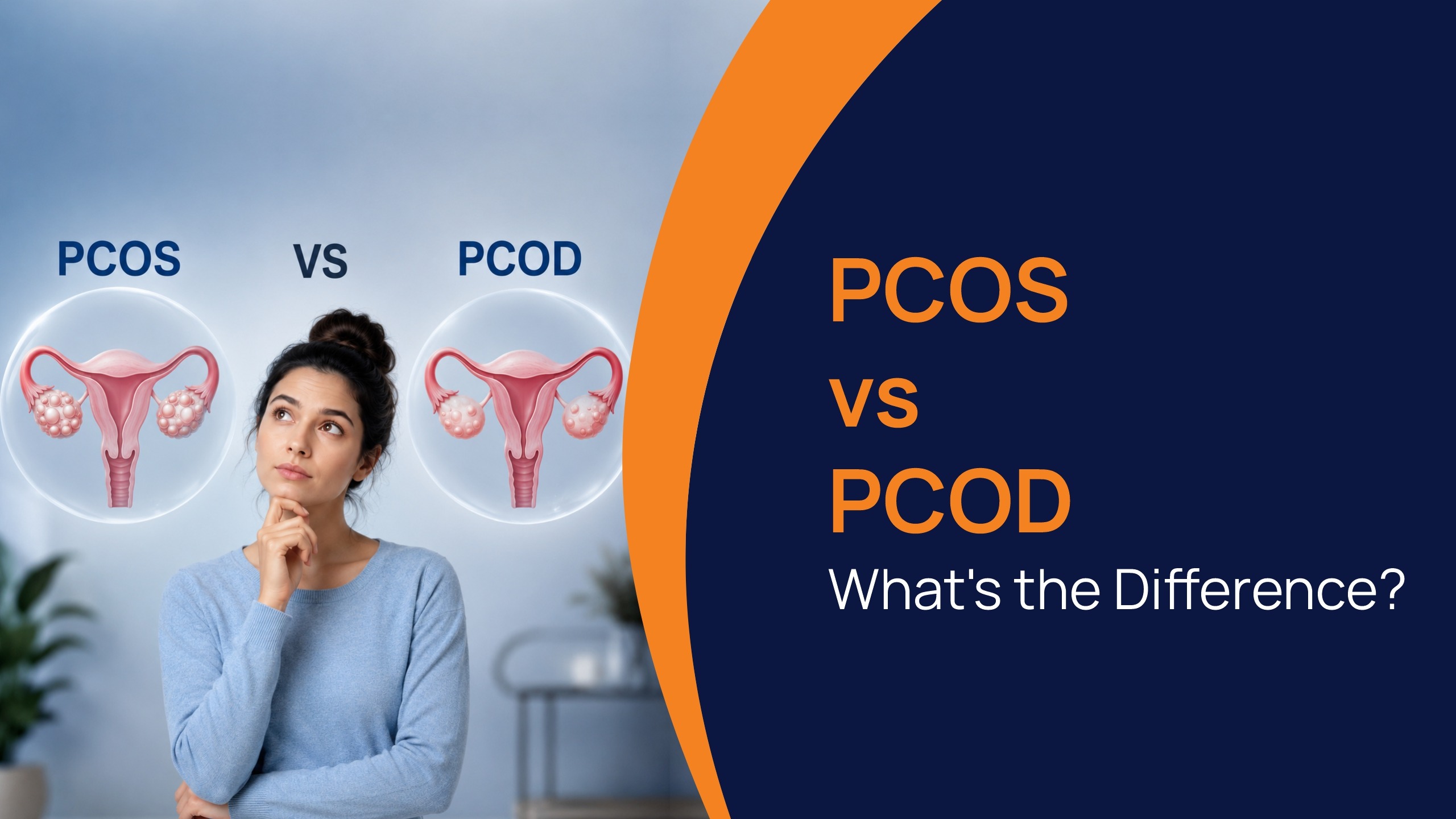
You’ve just returned from a doctor’s appointment and heard the terms PCOS and PCOD. Or maybe you’ve come across both while searching online and started wondering if they’re the same thing. You’re not alone, many women use these terms interchangeably. Understanding PCOS vs PCOD can help you make sense of your symptoms and choose the right care.
Quick Answer: Are PCOS and PCOD the Same?
No. PCOD (Polycystic Ovarian Disease) and PCOS (Polycystic Ovary Syndrome) are related hormonal conditions, but they aren’t identical. PCOD generally refers to ovaries releasing immature eggs, while PCOS is a broader hormonal and metabolic disorder affecting ovulation, fertility, and long-term health. Both need medical evaluation, and treatment depends on your specific symptoms.
What Is PCOD?
PCOD happens when the ovaries release immature or partially mature eggs, which can build up as small cysts over time. It’s fairly common and often linked to diet, inactivity, and stress. Common signs include irregular periods, mild weight gain, and occasional acne. Many women see noticeable improvement with dietary changes, exercise, and better sleep.
What Is PCOS?
PCOS is a hormonal disorder where the ovaries produce higher levels of androgens, which can disrupt ovulation altogether. It’s often linked to insulin resistance, where the body doesn’t use insulin efficiently. Because of this metabolic connection, PCOS carries a higher long-term risk of diabetes and heart disease, alongside symptoms like irregular periods, acne, and excess hair growth.
PCOS vs PCOD: Key Differences
Here’s a quick side-by-side comparison to make things clearer:
|
Aspect |
PCOD |
PCOS |
|
Meaning |
Ovaries release immature eggs |
Hormonal, metabolic disorder |
|
Hormonal changes |
Relatively mild |
More significant androgen/insulin imbalance |
|
Ovulation |
Irregular but usually occurs |
Often infrequent or absent |
|
Fertility |
Usually less affected |
Can be significantly affected |
|
Severity |
Generally milder |
Can be more severe |
|
Long-term risks |
Lower metabolic risk |
Higher diabetes, cardiovascular risk |
|
Treatment approach |
Often lifestyle alone |
Usually lifestyle plus medication |
Which Condition Is More Serious?
PCOS is generally considered the more serious of the two, mainly due to its stronger link to insulin resistance and higher long-term risk of diabetes and cardiovascular disease. That said, PCOD shouldn’t be brushed off either, since it can still affect your cycle and comfort if left unmanaged. Both deserve proper medical attention rather than a wait-and-see approach.
Can You Get Pregnant with PCOS or PCOD?
Yes, pregnancy is possible with both conditions, though the path can differ. Women with PCOD often ovulate, even if irregularly, so natural conception is common. PCOS can make ovulation less predictable or absent, sometimes requiring fertility treatment. Either way, most women go on to have healthy pregnancies with the right guidance.
How Are They Diagnosed?
Diagnosis for both usually starts with a medical history and physical exam, followed by blood tests for hormone levels and an ultrasound of the ovaries. Your gynaecologist may also test for insulin resistance if PCOS is suspected. Our guide on how PCOS is diagnosed covers more on what the tests involve.
Treatment Options
Treatment for both usually starts with lifestyle changes such as weight management and regular movement, and may include medication to regulate periods, manage insulin resistance, or support fertility when needed. The right combination depends on your symptoms and whether you’re trying to conceive. Our complete guide to PCOS symptoms and treatment covers this in more depth.
Can Lifestyle Changes Help?
Yes, for both PCOD and PCOS. A balanced diet, regular exercise, stress management, and adequate sleep can meaningfully improve symptoms and sometimes restore regular ovulation. Consistent small changes tend to help more than dramatic short-term fixes. If you’re wondering where to start, our guide on exercises that help manage PCOS symptoms is a good next read.
When Should You See a Gynaecologist?
Consider booking a consultation if you notice:
- Irregular or missed periods
- Difficulty conceiving
- Excess hair growth on the face or body
- Persistent acne that doesn’t improve
- Unexplained weight gain
Catching either condition early usually makes it easier to manage.
Women’s Hormonal Health Care at Terna Speciality Hospital
At Terna Hospital, the Gynaecology team evaluates and manages both PCOS and PCOD, from diagnosis through ongoing treatment planning. Care typically includes hormonal assessment, lifestyle guidance, and coordination with departments like endocrinology when insulin resistance is involved, so you aren’t left piecing together your own treatment plan.
Get your checkup done by an expert gynecologist at Terna Hospital, Navi Mumbai. Enquire now and consult our specialists.
Still have lingering questions? Let’s address the most common ones patients ask.
Is PCOS more serious than PCOD?
Generally, yes. PCOS carries a higher risk of long-term complications like diabetes and cardiovascular issues, while PCOD tends to be milder and more responsive to lifestyle changes.
Can PCOD turn into PCOS?
PCOD doesn’t automatically progress into PCOS, but if left unmanaged for a long time, some women develop symptoms that overlap significantly with PCOS.
Can women with PCOD become pregnant naturally?
Yes, many women with PCOD conceive naturally since ovulation, though irregular, usually still occurs. A gynaecologist can help if you’ve been trying without success.
Is PCOS a lifelong condition?
PCOS is generally considered lifelong, though symptoms can be well managed and often become less prominent with age and consistent treatment.
Can teenagers develop PCOS?
Yes, PCOS often first appears in the teenage years, shortly after periods begin, though it’s frequently diagnosed later when other concerns bring women in.
Disclaimer: The information shared in this content is for educational purposes only and not for promotional use.