
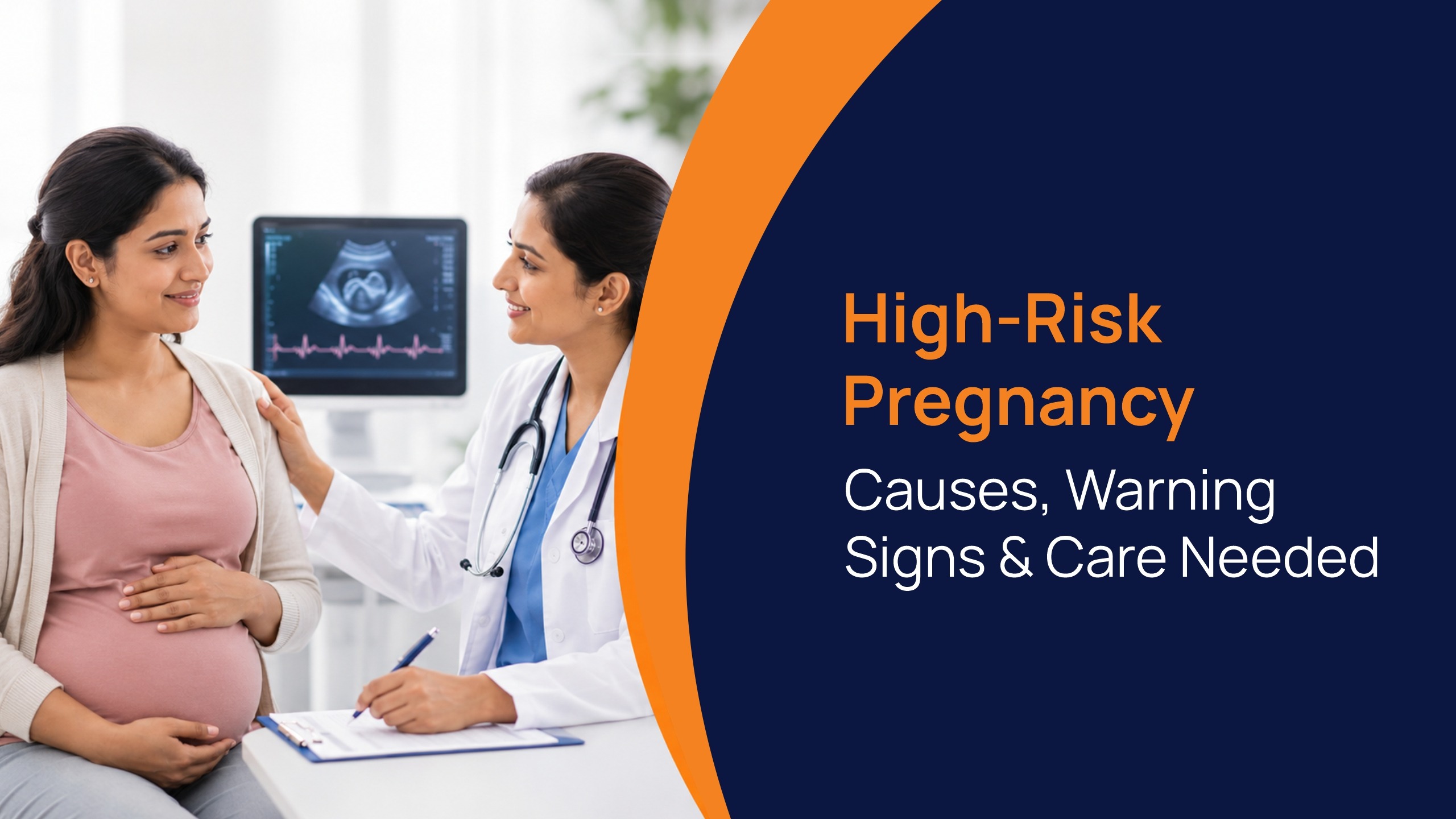
A pregnancy is called high-risk when a health condition, either present before conception or one that develops during pregnancy, raises the chance of complications for the mother, the baby, or both. It’s a monitoring category, not a prediction. Most women classified as high-risk go on to deliver healthy babies, provided the pregnancy is tracked closely by a specialist.
What Makes a Pregnancy High-Risk?
Doctors assign the classification based on a woman’s age, medical history, and how the pregnancy is progressing. It doesn’t mean something has gone wrong. It means your obstetrician wants to watch more closely for problems that are more likely to occur.
Common Causes of High-Risk Pregnancy
Age. Pregnancy before 17 or after 35 carries a higher chance of complications such as preterm birth, gestational diabetes, and chromosomal conditions.
Pre-existing health conditions. Diabetes, high blood pressure, thyroid disorders, autoimmune disease, kidney disease, and obesity all increase risk.
Multiple pregnancy. Carrying twins or more raises the likelihood of preterm labor and gestational diabetes.
Conditions that develop during pregnancy. Gestational diabetes, preeclampsia, and placenta previa can turn a routine pregnancy into a high-risk one partway through.
Pregnancy history. A previous miscarriage, preterm birth, or preeclampsia raises the chance of a repeat in a later pregnancy.
Warning Signs to Watch For
Call your doctor immediately, or go to the emergency room, if you notice:
- Vaginal bleeding or watery discharge
- A noticeable drop in fetal movement
- Severe or persistent headache, especially with blurred vision
- Sudden swelling in the face, hands, or legs
- Abdominal or chest pain
- Fever, or burning during urination
- Shortness of breath
Severe headache paired with blurred vision is worth flagging on its own: together, that combination is one of the more common early signs of preeclampsia, a blood pressure condition that needs prompt treatment. For a closer look at each of these symptoms and what they can mean, see Pregnancy Warning Signs & Symptoms: When to Call Your Doctor.
How Terna Hospital Manages High-Risk Pregnancies
At Terna Hospital’s Obstetrics& Gynaecology department in Navi Mumbai, high-risk cases are handled by OBGYN specialists working alongside endocrinologists, nutritionists, and mental wellness professionals when a case calls for it. The department runs advanced labor suites with continuous fetal monitoring and a neonatal ICU for babies who need extra support after delivery. Pain-management options during labor include epidurals, nitrous oxide, and doula support, and the team uses laparoscopic and hysteroscopic techniques where they’re appropriate, which tends to mean less scarring and a shorter hospital stay.
If your OBGYN flags your pregnancy as high-risk, expect more frequent visits, additional ultrasounds, and possibly non-stress tests or Doppler studies to track blood flow to the baby.
Managing a High-Risk Pregnancy Day to Day
Keep prenatal vitamins and any prescribed medications on schedule, follow your doctor’s guidance on activity level (this varies a lot depending on the specific condition, so don’t assume bed rest is automatic), and go to every scheduled appointment even if you’re feeling fine. Skipped visits are how early warning signs get missed.
The Emotional Side Doesn’t Get Talked About Enough
A high-risk label brings its own kind of stress, fear that something will go wrong, guilt that isn’t rational but shows up anyway, and an odd emotional whiplash between a reassuring appointment and a worrying one. That’s a normal reaction to real uncertainty, not a sign you’re handling things badly. If the anxiety is affecting your sleep or daily functioning, say so at your next appointment. Terna’s OBGYN team can loop in a mental wellness specialist as part of your care plan.
When to Book a Consultation
If you’re pregnant and have any of the risk factors above, or you’re already experiencing warning signs, don’t wait for your next scheduled visit. Terna Hospital’s OBGYN team is available for consultations in Nerul, Navi Mumbai, with 24/7 emergency support.
Visit the best gynecologist at Terna Hospital, Navi Mumbai. Enquire now and consult our specialists.
Still have lingering questions? Let’s address the most common ones patients ask.
Does a high-risk pregnancy mean something will go wrong?
No. It means your doctor is monitoring more closely because certain factors raise the odds of complications. Most high-risk pregnancies still end in a healthy delivery.
When does high-risk monitoring usually start?
It depends on the cause. Age- or condition-related risk is often flagged at the first prenatal visit. Risks that develop during pregnancy, like preeclampsia or gestational diabetes, are usually caught through routine screening in the second or third trimester.
Can a pregnancy move from high-risk back to lower-risk?
Sometimes. If a condition like gestational hypertension stays controlled and no new issues appear, your doctor may reduce the monitoring schedule. Age-related risk factors, obviously, don’t change.
Is bed rest required for every high-risk pregnancy?
No. Bed rest is prescribed for specific conditions, like certain cases of placenta previa or preterm labor risk, not as a default for every high-risk diagnosis. Ask your doctor what applies to your specific situation.
Do I need a maternal-fetal medicine specialist, or is my OBGYN enough?
Many high-risk pregnancies are managed entirely by an OBGYN. A maternal-fetal medicine referral usually comes up for more complex cases, such as multiple pregnancy with complications or a significant pre-existing condition.
Disclaimer: The information provided on this blog is for general educational purposes only and should not be considered a substitute for professional medical advice, diagnosis, or treatment. Always consult a qualified healthcare professional for advice.