
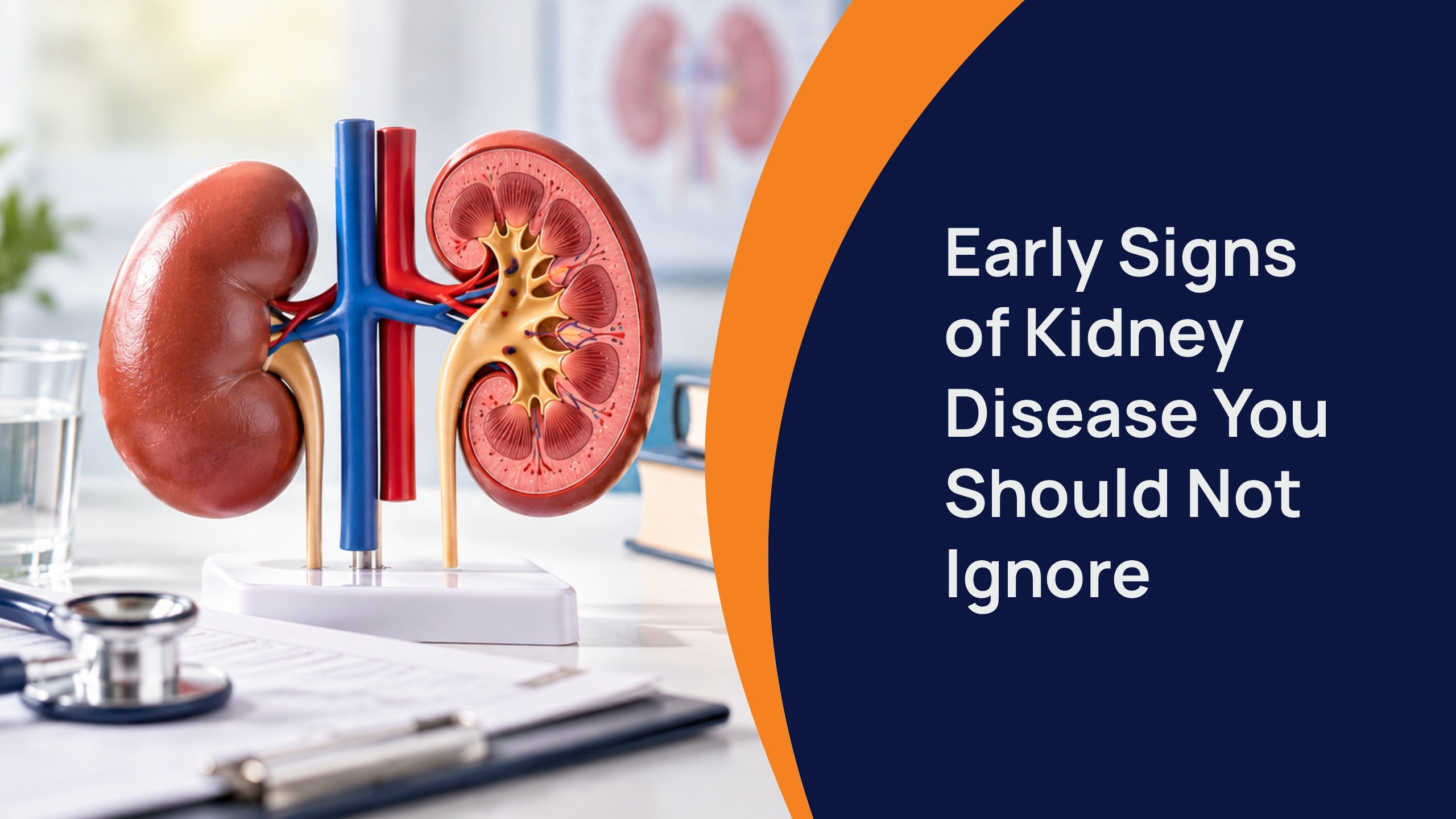
Kidney disease can develop gradually, and early kidney disease may cause few or no noticeable symptoms. As kidney function decreases, some people may experience changes in urination, swelling, tiredness, or changes in appetite.
Recognizing possible warning signs and getting appropriate testing can help identify kidney problems earlier. However, these symptoms can have many causes and do not necessarily mean kidney disease.
What Do the Kidneys Do?
The kidneys help:
- Remove waste and excess fluid from the blood
- Maintain fluid and electrolyte balance
- Help regulate blood pressure
- Produce hormones involved in red blood cell production
- Support healthy bones
When kidney function is impaired, waste products and excess fluid can build up in the body.
Early Signs of Kidney Disease
1. Changes in Urination
Changes in how often you urinate, the amount of urine, or the appearance of urine can be associated with kidney or urinary problems.
Blood in the urine, persistent foamy urine or significant changes in urination should be evaluated by a doctor.
2. Swelling in the Legs or Feet
Reduced kidney function can cause the body to retain excess fluid, leading to swelling around the ankles, feet or legs.
Persistent or unexplained swelling should be medically evaluated.
3. Persistent Tiredness
Kidney disease can sometimes cause fatigue or reduced energy. In chronic kidney disease, this may partly be related to anemia because the kidneys produce less erythropoietin.
However, tiredness has many possible causes and does not by itself indicate kidney disease.
4. Foamy Urine
Persistent or unusually foamy urine can sometimes indicate excess protein in the urine.
Protein in the urine, known as albuminuria, can be an early sign of kidney damage. A urine test can help determine whether protein is present.
5. Blood in the Urine
Blood in the urine, or haematuria, can have several causes, including urinary tract problems, kidney stones, infections and kidney disease.
Visible blood in the urine should not be ignored and should be evaluated by a healthcare professional.
6. Changes in Appetite or Nausea
As kidney function becomes significantly impaired, waste products can accumulate in the blood and contribute to nausea, reduced appetite or an unpleasant taste in the mouth.
These symptoms can also occur with many other conditions.
7. Muscle Cramps
Changes in fluid and electrolyte balance associated with kidney disease can contribute to muscle cramps or weakness.
Persistent or unexplained cramps should be discussed with a doctor, particularly if other symptoms are present.
8. Dry or Itchy Skin
Persistent dry or itchy skin can occur in advanced kidney disease due to changes in mineral and waste-product balance.
However, dry or itchy skin is common and has many possible causes.
9. Difficulty Concentrating
Some people with more advanced kidney disease may experience difficulty concentrating, reduced alertness or changes in mental clarity.
Persistent or worsening symptoms should be medically evaluated.
10. High Blood Pressure
High blood pressure and kidney disease are closely connected. High blood pressure can damage the kidneys, while kidney disease can also contribute to high blood pressure.
Regular blood pressure checks are therefore important, particularly for people at increased risk.
Who Is at Higher Risk of Kidney Disease?
Risk factors for chronic kidney disease include:
- Diabetes
- High blood pressure
- Heart disease
- Family history of kidney disease
- Older age
- Obesity
- Previous kidney problems
People with risk factors may benefit from regular kidney health checks even when they have no symptoms.
How Is Kidney Disease Diagnosed?
Kidney disease cannot be diagnosed based on symptoms alone. Depending on your symptoms and risk factors, a doctor may recommend:
Blood Tests: Creatinine and estimated glomerular filtration rate (eGFR) help assess kidney function.
Urine Tests: Urine tests can detect blood, protein and other abnormalities. A urine albumin-to-creatinine ratio (UACR) may be used to assess albumin in the urine.
Blood Pressure Measurement: Blood pressure assessment is an important part of evaluating kidney health.
Imaging Tests: An ultrasound or other imaging test may be recommended when needed to examine the kidneys and urinary system.
Not everyone requires every test. Investigations depend on individual symptoms, risk factors and clinical findings.
When Should You See a Doctor?
Consult a doctor if you have:
- Persistent changes in urination
- Blood or persistent foam in your urine
- Unexplained swelling
- Ongoing fatigue
- Repeated high blood pressure readings
- Diabeter other kidney disease risk factors
- A family history of kidney disease
Because early kidney disease symptoms may be absent, people at higher risk should also discuss appropriate screening with their healthcare provider.
Kidney Care at Terna Speciality Hospital & Research Centre, Navi Mumbai
Terna Speciality Hospital & Research Centre, Navi Mumbai, provides evaluation and management of kidney-related conditions.
Patients with symptoms, abnormal kidney test results, or risk factors such as diabetes and hypertension can undergo appropriate clinical assessment and investigations.
The team nephrologist at Terna Hospital can evaluate kidney function, identify possible causes of abnormalities, and recommend an individualized treatment and monitoring plan.
Final Takeaway
Kidney disease does not always cause obvious symptoms in its early stages. Changes in urination, persistent foamy urine, swelling, fatigue, blood in the urine and high blood pressure can be possible warning signs, but they may also have other causes.
If you have persistent symptoms or risk factors such as diabetes or hypertension, appropriate blood and urine testing can help assess your kidney health.
Consult Terna Speciality Hospital & Research Centre
If you have concerns about your kidney health, abnormal kidney test results or symptoms that may be related to kidney problems, consult the appropriate specialist at Terna Speciality Hospital & Research Centre, Navi Mumbai.
Expert care for any type of kidney disease at Terna Hospital, Navi Mumbai. Enquire now and consult our nephrologist today.
Still have lingering questions? Let’s address the most common ones patients ask.
What is the first sign of kidney disease?
There may be no noticeable symptoms in early kidney disease. When symptoms occur, changes in urination, foamy urine, swelling or fatigue may be possible signs.
Can kidney disease be detected early?
Yes. Blood and urine tests can help detect kidney damage or reduced kidney function, sometimes before significant symptoms develop.
Does every premature baby need NICU care?
No. The need for NICU admission depends on the baby’s gestational age, breathing, feeding, temperature, overall health and other medical needs.
Is foamy urine always a sign of kidney disease?
No. Temporary foamy urine can have several causes. Persistent foamy urine may indicate protein in the urine and should be evaluated.
Can kidney disease cause swelling in the feet?
Yes. Reduced kidney function can contribute to fluid retention, which may cause swelling in the feet, ankles or legs. Other conditions can also cause swelling.
Who should get tested for kidney disease?
People with diabetes, high blood pressure, heart disease, a family history of kidney disease or other risk factors should discuss kidney screening with their doctor.
Disclaimer: The information shared in this content is for educational purposes only and not for promotional use.