
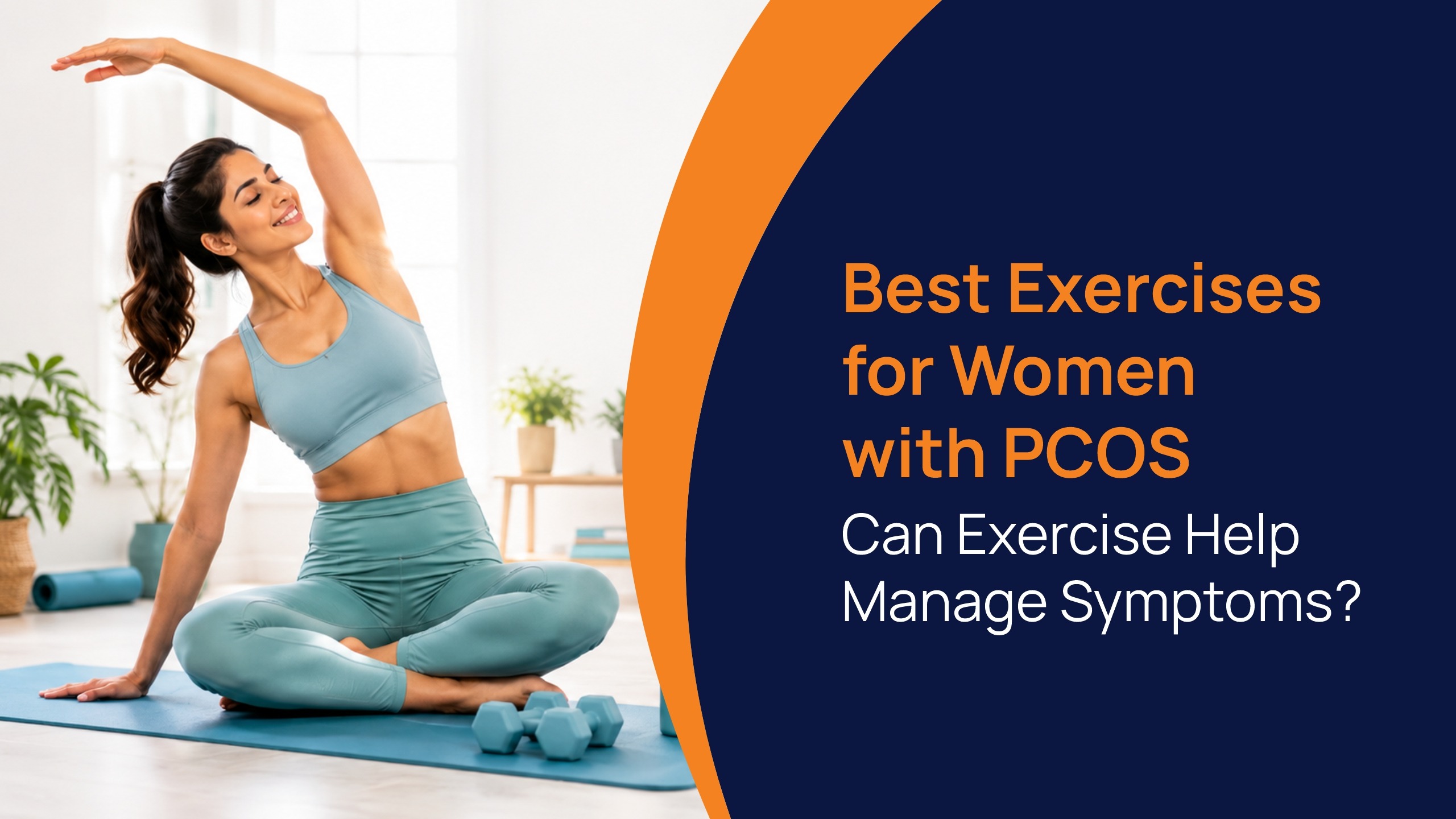
You’ve cleaned up your diet. You’re taking your medicines on time. And you’re still wondering if any of this is actually working, or if exercise is the piece you’re missing.
It usually is. Regular movement is one of the few things that reliably helps with PCOS, not because it’s a miracle cure, but because it works on the same systems the condition disrupts: insulin, hormones, weight, mood. You don’t need to train like an athlete. You need to move consistently and pick something you’ll actually keep doing.
Why exercise matters for PCOS
Most women with PCOS also deal with some degree of insulin resistance. Muscles that are active use glucose more efficiently, which eases the load on insulin. That alone can improve several things:
- Insulin sensitivity
- Weight management
- Hormone regulation, which can support ovulation
- Stress, sleep, and mood
None of this happens overnight. But it adds up.
What kind of exercise actually helps
Walking. Unglamorous, but effective, especially if you’re starting from zero. Thirty minutes a day, most days of the week, is enough to move the needle on insulin sensitivity and heart health.
Strength training. This is the one most women with PCOS skip, and it’s probably the most useful. More muscle means your body clears glucose more efficiently, even at rest. Two to three sessions a week with weights or resistance bands is a reasonable target.
Cardio. Cycling, swimming, jogging, dancing, anything that keeps your heart rate up for a while. Good for your heart and useful for weight management, though it shouldn’t be the only thing you do.
Yoga. Won’t burn many calories, but it lowers cortisol, and elevated cortisol doesn’t help PCOS. Also genuinely useful for flexibility and stress.
Pilates. Builds core strength and improves posture and body awareness. A solid complement to strength training, not a replacement for it.
How much do you actually need?
The general guidance for adults is around 150 minutes of moderate activity a week, plus strength training on two or more days. That could be five 30-minute walks and two short weight sessions. Your gynecologist can adjust this based on your weight, fitness level, and any other conditions you’re managing.
Getting started without burning out
- Start slower than feels necessary. Consistency beats intensity in the first few months.
- Pick something you don’t dread. You won’t keep doing something you hate.
- Drink water, wear shoes that actually fit, and skip the comparisons to someone else’s week fifty.
- Show up on the days you don’t feel like it. That’s the part that actually changes things.
Common mistakes to avoid
Exercising only to lose weight, then quitting when the scale doesn’t move fast enough. Overtraining, which raises cortisol and can work against you. Skipping strength training because cardio feels more “real.” Following an extreme plan from social media that falls apart by week three. Giving up after one bad week instead of just starting again the next day.
Can exercise alone manage PCOS?
No. Exercise works alongside a healthy diet, any medication your doctor has prescribed, sleep, and stress management. Skip the rest and exercise ends up carrying a load it was never meant to carry alone.
PCOS care at Terna Speciality Hospital, Navi Mumbai
If you’re not sure where to start, or your symptoms haven’t improved despite doing “everything right,” it’s worth talking to a gynecologist. At Terna Speciality Hospital, the team builds treatment plans around your specific hormone levels, weight, and daily routine, including lifestyle counselling and weight management guidance, instead of handing out the same generic advice to everyone.
Visit the best gynecologist at Terna Hospital, Navi Mumbai. Enquire now and consult our specialists.
Still have lingering questions? Let’s address the most common ones patients ask.
Which exercise is best for PCOS?
There isn’t one single best option. A mix of strength training and moderate cardio, with walking as your baseline, tends to work better than any one activity alone.
Can walking help with PCOS?
Yes. It’s low-impact and easy to sustain, which matters more than intensity when you’re just starting out.
Does exercise improve irregular periods?
It can, especially alongside weight management, since insulin resistance and hormone regulation are closely linked. Results vary and it isn’t guaranteed for everyone.
Is yoga good for PCOS?
Yes, mainly through stress reduction rather than calorie burn. Pair it with strength training for a fuller effect.
Can I exercise during my periods?
Generally yes, though lighter activity like walking or yoga may feel more comfortable on the first day or two.
Disclaimer: The information provided on this blog is for general educational purposes only and should not be considered a substitute for professional medical advice, diagnosis, or treatment. Always consult a qualified healthcare professional for advice.