
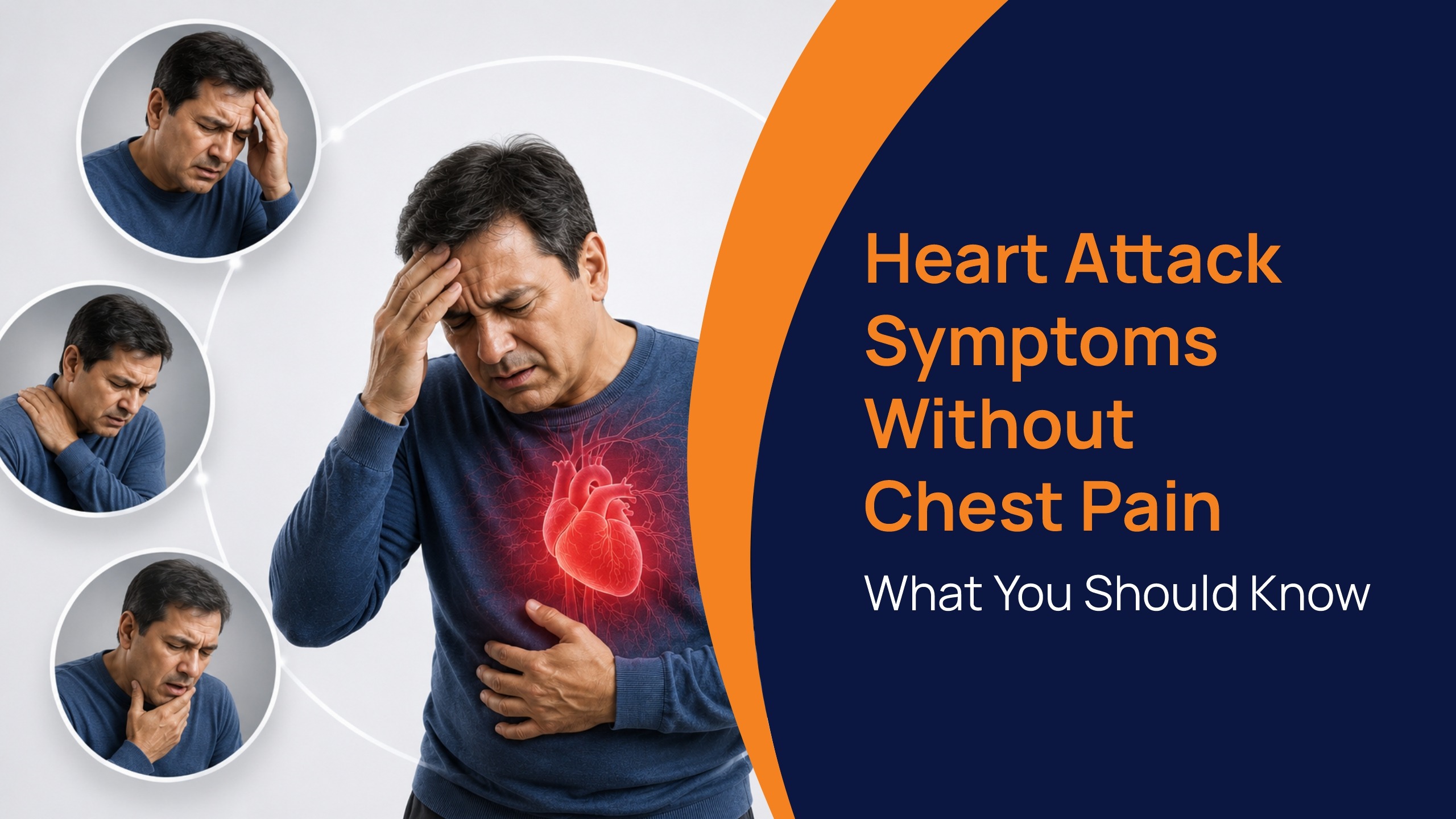
Most people picture a heart attack as sudden, crushing chest pain. That image holds true for some heart attacks. It’s also why so many others get missed.
A meaningful share of heart attacks show up as something else entirely: breathlessness, fatigue that doesn’t add up, nausea, or an ache in the jaw or back, with no chest pain at all. These are sometimes called silent or atypical heart attacks, and they’re common enough to matter. They just get explained away as indigestion, a bad night’s sleep, or getting older.
If you or someone near you has several of the symptoms below, especially alongside risk factors like diabetes or high blood pressure, call for emergency help right away. Don’t wait to see if it passes.
Why Heart Attacks Don’t Always Cause Chest Pain
A heart attack happens when blood flow to part of the heart muscle gets blocked, usually by a clot in a narrowed artery. Chest pain is the classic warning because the heart’s nerve pathways often route pain there. Those pathways don’t work the same for everyone, though, and sometimes the signal gets referred somewhere else, or barely registers at all.
How Silent or Atypical Heart Attacks Happen
Nerves carrying pain signals from the heart share routes with nerves from other parts of the body. That’s part of why heart attack pain can show up in the jaw, arm, or back instead of the chest. In some cases the signal is faint enough that it’s felt only as fatigue or breathlessness, even though the heart muscle is genuinely short on oxygen. A “silent” heart attack goes further still: real damage to the heart muscle, with no dramatic symptoms at the time. It sometimes turns up later on a routine ECG, with the patient having no memory of a specific event.
Who’s More Likely to Skip the Classic Chest Pain
Atypical presentation shows up more often in people with diabetes, women, adults over 65, and anyone who’s already had a heart attack or heart surgery. If that describes you, it’s worth knowing the full symptom list rather than just the textbook one.
The Symptoms to Watch For Instead
None of these confirm a heart attack on their own. Together, or alongside known risk factors, they’re worth taking seriously.
Shortness of Breath
Breathlessness with little exertion, or that appears suddenly at rest, can mean the heart isn’t pumping well. It sometimes shows up hours or even days before anything else does.
Sudden, Unusual Fatigue
Not ordinary tiredness. A heaviness that feels disproportionate to what you’ve been doing, like needing to sit down after a few stairs that never bothered you before.
Nausea, Indigestion, or Vomiting
A heart attack can feel like a bad case of heartburn, especially when the blockage affects the lower part of the heart. This is exactly why it gets self-treated with antacids instead of checked out.
Pain in the Jaw, Neck, Back, or Arms
Pain radiating down the left arm is well known, but it shows up just as easily in the jaw, upper back, or neck, often felt as pressure or a dull ache rather than anything sharp.
Cold Sweats and Lightheadedness
Breaking into a cold sweat for no clear reason, or feeling suddenly faint, can mean the heart is struggling to keep blood moving. Combined with any symptom above, it shouldn’t be brushed off.
Why Women Often Experience Different Symptoms
Women are more likely than men to have a heart attack without obvious chest pain, and it’s a big reason heart disease in women gets caught later than it should.
Symptoms More Commonly Reported by Women
Women having a heart attack more often describe unusual fatigue in the days before, disturbed sleep, shortness of breath, and pain in the back or jaw rather than the chest. Nausea and lightheadedness come up more in their accounts too.
Why These Cases Get Missed or Misdiagnosed
Part of this is biological: women are more prone to blockages in smaller coronary vessels that don’t produce the same textbook pattern as a blockage in a major artery. Part of it is expectation. Both patients and clinicians can default to the chest-clutching image of a heart attack, so symptoms that don’t fit get chalked up to anxiety or acid reflux. Women often end up waiting longer to seek care as a result.
Other Groups at Higher Risk of Atypical Symptoms
People with Diabetes
Long-term diabetes can damage the nerves carrying pain signals from the heart, a condition called cardiac autonomic neuropathy. It’s one of the clearest reasons diabetic patients are more likely to have a silent heart attack: the warning signal that would normally prompt a call for help just doesn’t fire the same way.
Older Adults
Pain perception changes with age, and older adults often have overlapping conditions that mask or mimic heart attack symptoms. Confusion, weakness, or a fall are sometimes the only signs, with no complaint of pain at all.
People Who’ve Had a Previous Heart Attack
Scar tissue and altered nerve pathways from a prior heart attack change how future events are felt. New, unexplained fatigue or breathlessness is worth checking rather than dismissing as unrelated.
When to Call Emergency Services
Symptoms That Warrant Immediate Action
Call an ambulance for breathlessness at rest, sudden severe fatigue, nausea with sweating or dizziness, pain or pressure in the jaw, neck, back or arms, cold clammy sweating, or a feeling that you might faint, particularly if more than one shows up together. The heart muscle starts dying within minutes of a blocked artery, so time matters more than certainty does.
What to Do While Waiting for Help to Arrive
Call for an ambulance rather than driving yourself; paramedics can start treatment on the way. Sit or lie down and stay as calm as you can. If a doctor has told you it’s appropriate and you’re not allergic, chewing one adult aspirin tablet can help, but don’t delay the call to look for it. Unlock the door if you’re alone. If someone loses consciousness with no pulse, start CPR if you’re trained, and follow the dispatcher’s instructions.
How Doctors Diagnose a Heart Attack Without Chest Pain
Because symptoms can be vague, diagnosis leans on tests rather than how the pain feels.
Tests Used to Confirm It
An ECG records the heart’s electrical activity and can show damage within minutes. A troponin blood test picks up a protein released when heart muscle is injured, often the clearest confirmation when symptoms were mild. An echocardiogram checks how well the heart is pumping, and coronary angiography or a CT coronary angiogram shows exactly where an artery is blocked. At Terna Hospital, these tests run around the clock through the cardiology department’s cath lab and ICU, so a suspected heart attack can be confirmed and treated without delay, whatever the symptoms looked like going in.
Lowering Your Risk
Lifestyle Factors That Matter Most
Move regularly, even brisk walking most days. Cut back on ultra-processed food and excess salt. Quit smoking; risk starts dropping within a year of stopping. Manage stress and get enough sleep, since both feed into blood pressure over time.
Conditions Worth Managing Closely
High blood pressure, high cholesterol, and diabetes are the three conditions most tied to heart attack risk, and all three respond to regular monitoring and treatment. If you have any of them, routine check-ups matter more than they might seem to, since these conditions are exactly what blunts the body’s usual warning signs.
Get your heart health checkup at Terna Hospital, Navi Mumbai. Enquire now and consult our specialists.
Still have lingering questions? Let’s address the most common ones patients ask.
Can you have a heart attack without any chest pain at all?
Yes. This is common enough to have its own name, atypical or silent presentation, and it happens more often in women, older adults, and people with diabetes.
What is the most common symptom of a heart attack besides chest pain?
Shortness of breath and unusual fatigue, often showing up hours or days before anything else.
Is a silent heart attack dangerous even if I didn't feel it?
Yes. It still damages heart muscle and carries the same long-term risks, including future heart attacks and heart failure, as one with obvious symptoms.
How quickly should I get to a hospital if I suspect a heart attack?
Immediately, by ambulance rather than your own transport. Treatment within the first hour or two gives the best chance of limiting damage to the heart.
Disclaimer: The information shared in this content is for educational purposes only and not for promotional use.