
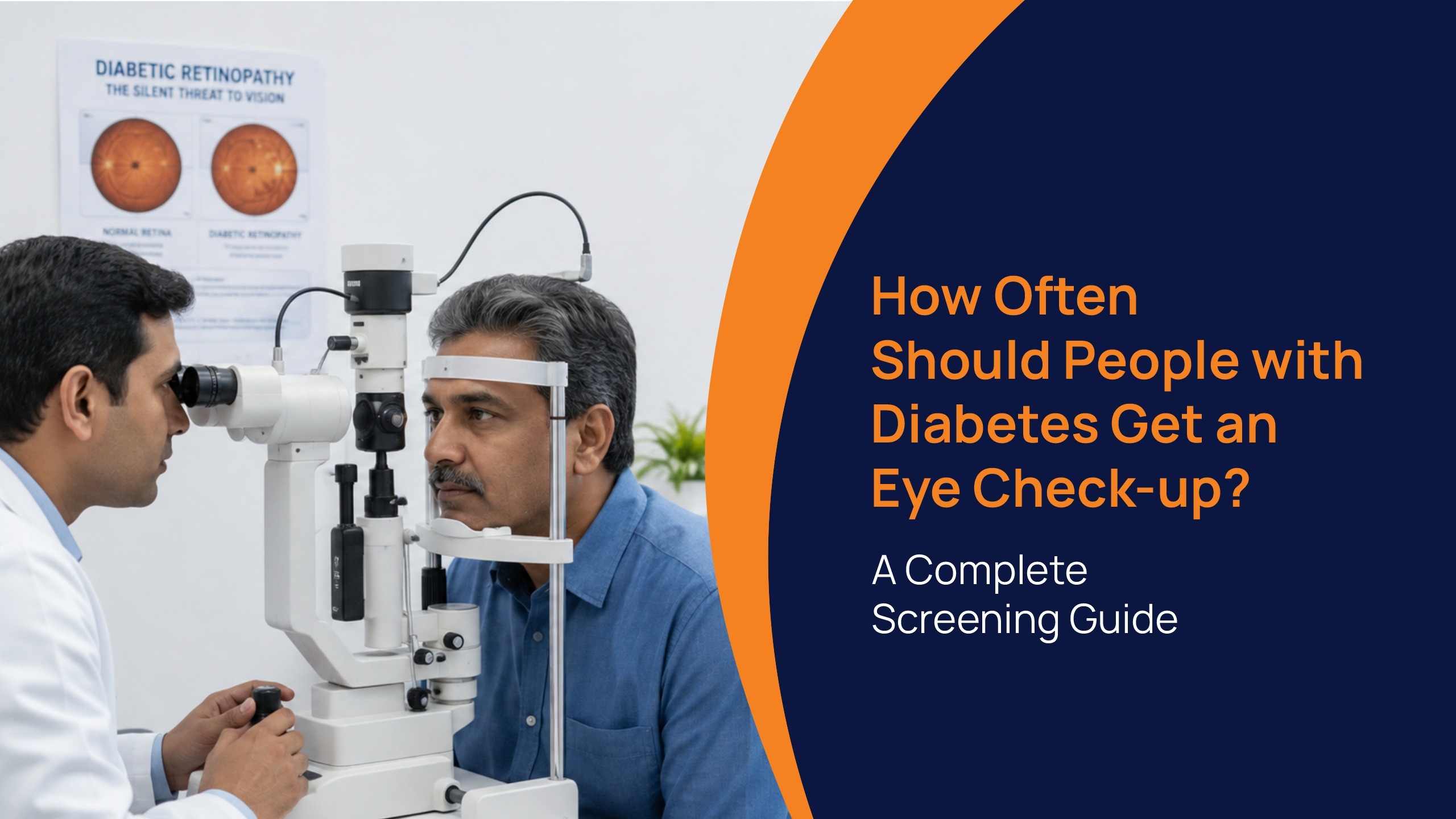
Your eyes feel completely fine. You can read your phone screen without trouble, drive comfortably, and nothing looks blurry. So when your doctor brings up your last eye exam, it’s tempting to think, why bother going now?
With diabetes, that’s exactly the thinking that lets a diabetic eye checkup slip from a yearly habit into something you keep postponing. This guide covers how often you actually need one, what to expect during the exam, and why skipping it isn’t worth the risk.
Why Regular Eye Check-ups Matter Even If Your Vision Feels Normal
Diabetic eye disease can quietly affect the retina long before you notice any change in your vision. That’s the part most people don’t expect, feeling fine isn’t the same as being fine. A diabetic eye checkup is designed to catch that early, silent change while it’s still easiest to manage.
How Often Should You Get a Diabetic Eye Checkup?
The right schedule depends on your specific situation. Here’s a general guide:
Type 1 Diabetes
An eye exam is usually recommended within five years of diagnosis and annually after that.
Type 2 Diabetes
Since Type 2 diabetes can go undetected for a while before diagnosis, an eye exam is typically recommended right at diagnosis, followed by annual screening.
Pregnant Women with Diabetes
Pregnancy can speed up changes in the retina, so an eye exam early in pregnancy is usually advised, with follow-ups as your doctor recommends.
Already Diagnosed with Diabetic Eye Disease
If diabetic eye disease has already been detected, your ophthalmologist may recommend more frequent checkups, sometimes every three to six months, depending on how things are progressing.
These are general guidelines. Your ophthalmologist will fine-tune the schedule based on your individual eye health.
What Happens During a Diabetic Eye Check-up?
A diabetic eye checkup usually involves a few straightforward steps:
- A basic vision test to check how clearly you’re seeing
- A dilated eye exam, where drops widen your pupil for a clearer view of the retina
- Retinal imaging to photograph the back of the eye
- Optical Coherence Tomography (OCT), if your doctor needs a closer look at the retina’s layers
Not every visit requires every test. Your ophthalmologist decides what’s needed based on your history and what they find during the exam.
How Long Does the Exam Take?
Most diabetic eye checkups take around 30 to 45 minutes, including the time it takes for your pupils to dilate. If OCT or additional imaging is needed, it may take a little longer.
Are the Tests Painful?
No. A diabetic eye checkup is painless. The main thing you’ll notice is some light sensitivity and blurred near vision for a few hours after your pupils are dilated, so it helps to arrange a ride home if you can.
Why Skipping Your Annual Screening Is a Risk
Diabetic eye disease tends to progress gradually, often without symptoms until it’s more advanced. Skipping your annual diabetic eye checkup means losing the window where treatment is simplest and most effective. Left unchecked for years, it can lead to vision loss that’s far harder to reverse.
Tips to Protect Your Eyes Between Appointments
- Keep your blood sugar within your doctor’s target range
- Manage your blood pressure and cholesterol
- Wear sunglasses that block UV rays when outdoors
- Don’t ignore sudden vision changes, even between scheduled visits
- Keep a record of your exam dates so you don’t lose track
Diabetic Eye Screening at Terna Speciality Hospital
At Terna Speciality Hospital & Research Centre, our ophthalmology team offers comprehensive diabetic eye screening, including dilated exams and retinal imaging, so your care doesn’t have to be pieced together across multiple clinics. If you’d like to understand more about diabetic eye disease itself, including symptoms and risk factors, our guide on diabetic eye disease covers that in detail.
Final Thoughts
A diabetic eye checkup is one of the simplest habits that protects one of your most important senses. If it’s been more than a year since your last one, or you fall into one of the higher-risk groups above, don’t wait for a symptom to prompt you. Book an appointment with an ophthalmologist at Terna Speciality Hospital & Research Centre and keep your eye health on schedule.
Visit the eye specialist at Terna Hospital, Navi Mumbai. Enquire now and consult our specialists.
Still have lingering questions? Let’s address the most common ones patients ask.
How often should a diabetic get an eye exam?
Most people with diabetes should get a dilated eye exam once a year, though your ophthalmologist may recommend more frequent visits depending on your eye health and diabetes history.
Does a diabetic eye checkup hurt?
No, the checkup itself is painless. The only temporary effect is light sensitivity and blurred near vision for a few hours after your eyes are dilated.
Can I skip my eye exam if my vision feels fine?
It’s best not to. Diabetic eye disease often develops without symptoms in its early stages, so normal-feeling vision doesn’t rule out changes happening in the retina.
How long does a diabetic eye exam take?
Most exams take around 30 to 45 minutes, including time for your pupils to dilate, though additional imaging can extend this slightly.
Do pregnant women with diabetes need more frequent eye checks?
Yes, pregnancy can speed up changes in the retina, so doctors usually recommend an eye exam early in pregnancy with follow-ups as needed.
Disclaimer: The information provided on this blog is for general educational purposes only and should not be considered a substitute for professional medical advice, diagnosis, or treatment. Always consult a qualified healthcare professional for advice.