
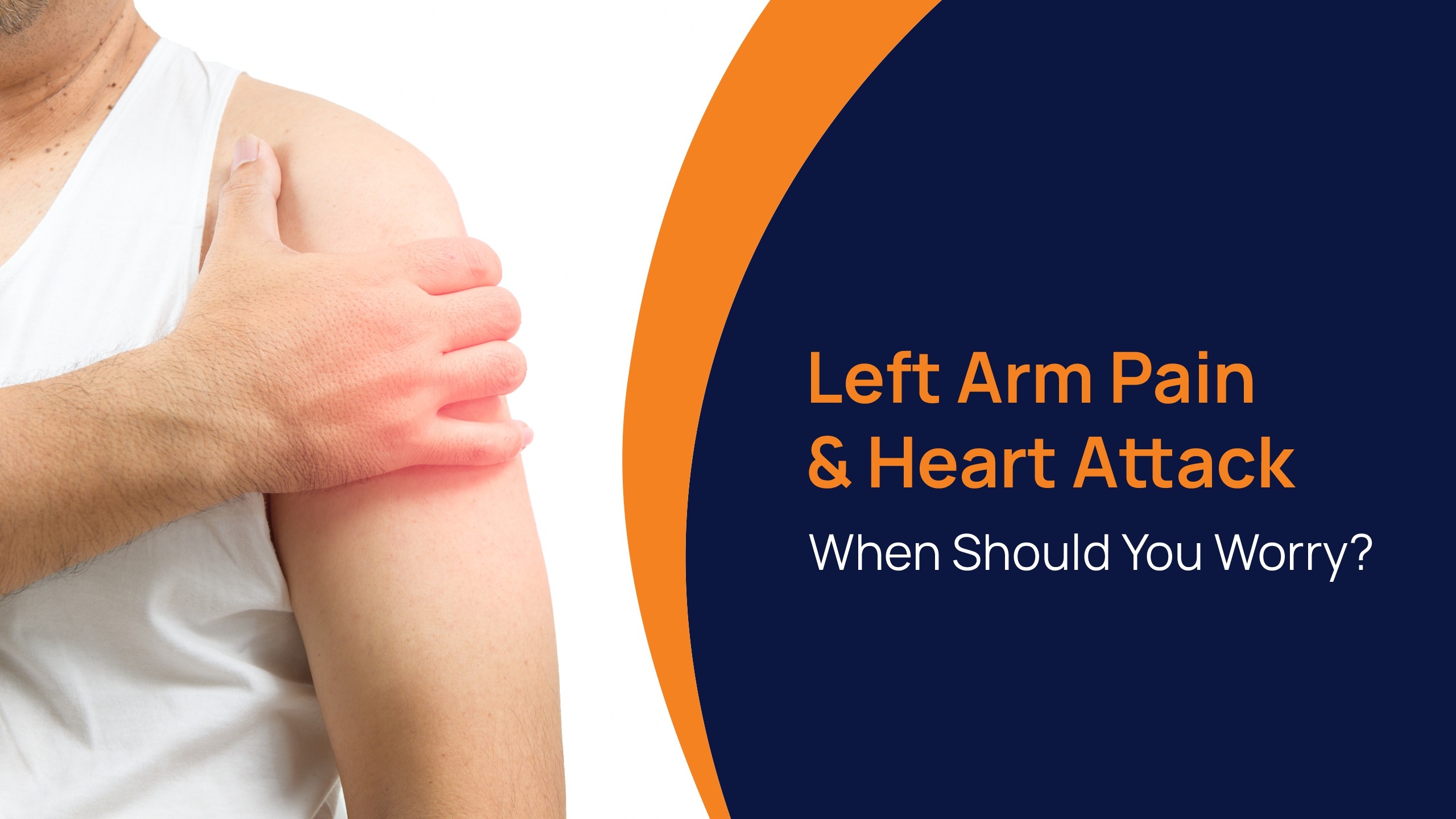
You slept on your arm wrong. Or you didn’t, and now you’re googling this at 2am wondering if you should wake someone up.
Left arm pain sits in an odd spot: common enough that it’s usually nothing, serious enough that ignoring it can occasionally cost someone their life. The difference often comes down to a handful of details most people don’t know to look for.
Why Heart Problems Cause Arm Pain
The heart and the left arm share nerve pathways that feed into the same section of the spinal cord, roughly the T1 to T4 segments. When the heart muscle is starved of oxygen during a heart attack, those distress signals travel up shared nerves alongside signals from the arm. The brain gets the wires crossed and locates the pain in the arm instead of, or in addition to, the chest.
This is called referred pain, and it’s the same mechanism behind gallbladder problems showing up as shoulder blade pain. The heart itself sits slightly left of center in the chest, which is part of why the left arm is affected more often than the right. But the right arm isn’t off the hook. Pain there can mean the same thing, and it tends to get dismissed more often precisely because people aren’t looking for it there.
What Left Arm Pain from a Heart Attack Feels Like
Dull Ache vs Sharp Pain
Heart-related arm pain usually presents as a dull, heavy ache or a sense of pressure rather than a sharp, stabbing sensation. If you can point to one exact spot and the pain gets worse when you press on it or move your arm a certain way, that leans toward a muscle or joint issue instead.
Pain That Spreads to the Shoulder or Hand
Cardiac arm pain tends to travel rather than stay put. It can start near the shoulder and work down toward the elbow and wrist, or show up as an overall heaviness through the whole limb instead of one localized point.
Numbness or Tingling in the Arm
This one’s tricky because it can go either way. Numbness or tingling on its own is more commonly linked to a pinched nerve in the neck than to the heart. But paired with chest pressure, shortness of breath, or sweating, it belongs on the “get checked now” list.
Left Arm Pain Symptoms That Signal an Emergency
Pain with Chest Pressure or Tightness
This is the combination doctors take most seriously. Chest tightness that spreads into the arm, particularly if it lasts more than a few minutes or keeps coming back, needs immediate attention.
Pain with Shortness of Breath
Feeling winded on top of arm pain, especially without any physical exertion to explain it, is a strong signal that something beyond a strained muscle is going on.
Pain with Sweating, Nausea, or Dizziness
Cold sweats, nausea, or a lightheaded feeling alongside arm pain point toward the heart rather than a musculoskeletal cause. None of these symptoms belong to a pulled muscle.
If you notice any of these combinations, call emergency services. Don’t drive yourself, and don’t wait to see if it passes.
Common Non-Heart Causes of Left Arm Pain
Muscle Strain or Injury
Overuse, heavy lifting, or an awkward movement can strain the muscles or tendons of the arm and shoulder. This kind of pain usually has a clear trigger and gets worse with specific movements.
Nerve Compression (Cervical Radiculopathy)
A pinched nerve in the neck can send pain, tingling, or weakness down the arm. Unlike heart-related pain, it typically worsens when you turn or tilt your head and doesn’t come with shortness of breath or nausea.
Poor Posture or Sleeping Position
Sleeping on your arm, slouching at a desk, or carrying a heavy bag on one shoulder for too long can all cause a dull ache that improves once you shift position and move around.
How to Tell the Difference: Heart Attack vs Muscular Pain
Heart-related arm pain tends to show up alongside other symptoms: chest pressure, breathlessness, sweating, nausea. It’s diffuse rather than pinpointed, and resting the arm doesn’t make it go away.
Muscular pain, by contrast, usually has an identifiable cause (you lifted something, slept wrong, overused the shoulder), stays in one spot, and responds to rest, stretching, or changing position. It also doesn’t come with chest symptoms or breathing trouble.
When in doubt, treat any arm pain accompanied by chest discomfort, breathlessness, or sweating as a potential cardiac event until proven otherwise.
Who Is More Likely to Feel Arm Pain During a Heart Attack?
Certain groups are more prone to atypical heart attack presentations, including arm pain without obvious chest pain:
- Women, who more often report jaw, back, or arm pain instead of classic chest pressure
- People with diabetes, due to nerve damage that can blunt typical pain signals
- Older adults
- People who’ve had a previous heart attack
If you fall into one of these groups, it’s worth taking arm pain more seriously even when it feels mild.
What to Do If You Experience Left Arm Pain
When to Call Emergency Services
Call immediately if arm pain comes with chest pressure, shortness of breath, sweating, nausea, or dizziness, or if the pain is sudden, severe, and doesn’t ease with rest.
When to See a Doctor (Non-Emergency)
If the pain is mild, has an obvious cause like overuse or poor sleep position, and isn’t accompanied by any of the symptoms above, it’s reasonable to monitor it for a day or two. See a doctor if it persists, worsens, or keeps recurring.
How Doctors Diagnose the Cause of Arm Pain
Doctors typically start with an ECG to check the heart’s electrical activity and blood tests to look for cardiac enzymes if a heart attack is suspected. If the heart is ruled out, they may examine the neck and shoulder for signs of nerve compression, or order imaging like an X-ray or MRI to check for musculoskeletal causes
Get your heart health checkup at Terna Hospital, Navi Mumbai. Enquire now and consult our specialists.
Still have lingering questions? Let’s address the most common ones patients ask.
Does left arm pain always mean a heart attack?
No. Most cases of left arm pain come from muscle strain, poor posture, or nerve compression rather than the heart. It becomes more concerning when it shows up alongside chest pressure, shortness of breath, sweating, or nausea.
Can right arm pain also indicate a heart attack?
Yes. The same referred pain mechanism can affect either arm, or both. Right arm pain gets overlooked more often simply because most people only associate the left side with heart problems.
How long does heart-related arm pain last?
It often lasts more than a few minutes and may come and go rather than resolving completely. Pain that keeps returning, especially with other symptoms, shouldn’t be brushed off as something that will pass on its own.
Disclaimer: The information shared in this content is for educational purposes only and not for promotional use.