
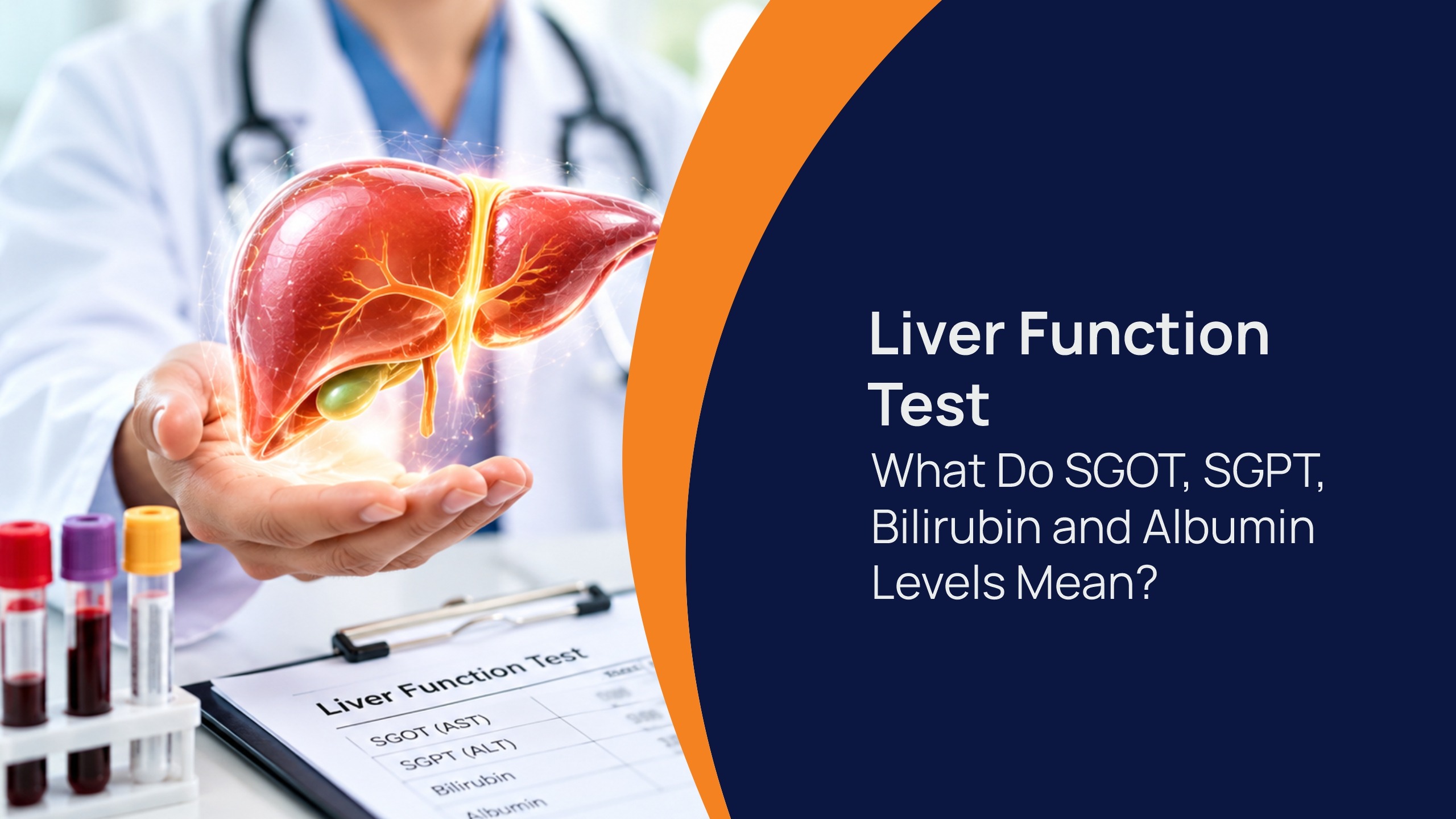
A liver function test (LFT) is a group of blood tests that helps doctors assess liver health and identify possible signs of liver injury or disease. Understanding high liver enzymes, raised bilirubin or low albumin can help you discuss your test results with your doctor.
An abnormal result does not always indicate serious liver disease. Each marker provides different information and must be interpreted alongside your symptoms and medical history.
What Is a Liver Function Test?
A liver function test measures enzymes, proteins and other substances in your blood. Doctors may recommend it during routine check-ups, when symptoms suggest a liver problem or to monitor an existing condition.
Common markers include SGOT (AST), SGPT (ALT), bilirubin, albumin, alkaline phosphatase (ALP) and gamma-glutamyl transferase (GGT). These help identify possible liver cell injury, bile flow problems and changes in protein production.
A liver function test may also be recommended as part of a routine health check-up, depending on your doctor’s advice
What Do SGOT and SGPT Levels Mean?
SGOT (AST) is found in the liver, muscles, heart and other tissues. High SGOT levels may occur due to liver injury, alcohol-related liver disease, certain medicines or muscle damage.
SGPT (ALT) is found mainly in the liver. High SGPT levels may indicate liver cell injury associated with fatty liver disease, viral hepatitis, alcohol-related liver disease or certain medicines.
Raised SGOT and SGPT levels do not identify the cause on their own. Doctors interpret them alongside other test results and medical history.
What Do Bilirubin and Albumin Levels Mean?
Bilirubin: This yellow substance forms when old red blood cells break down. The liver processes it so it can leave the body. High bilirubin levels can cause jaundice, which may appear as yellowing of the eyes or skin, dark urine or pale stools. Possible causes include liver injury, bile duct obstruction and increased red blood cell breakdown.
Albumin: This protein is produced by the liver and helps maintain fluid balance. Low albumin levels may occur with advanced liver disease, kidney problems, inflammation or poor nutrition. A low result alone cannot confirm liver disease.
What Is the Normal Liver Function Test Range?
Ranges vary between laboratories due to differences in testing methods. The following are illustrative adult reference ranges. Always compare your results with those printed on your laboratory report.
|
Test |
Typical adult reference range |
|
SGOT (AST) |
8–48 U/L |
|
SGPT (ALT) |
7–55 U/L |
|
Total bilirubin |
0.1–1.2 mg/dL |
|
Albumin |
3.5–5.0 g/dL |
|
ALP |
40–129 U/L |
|
GGT |
8–61 U/L |
These are general examples, not universal cut-offs. Normal results also do not rule out every liver condition.
What Causes an Abnormal Liver Function Test?
An abnormal liver function test may be associated with:
- Fatty liver disease: Fat accumulation can raise liver enzyme levels.
- Viral hepatitis: Hepatitis B and C can cause liver inflammation.
- Alcohol-related liver injury: Regular or excessive alcohol consumption can affect liver health.
- Medicines and supplements: Certain prescription medicines, over-the-counter drugs and herbal products can affect results.
- Bile duct conditions: Blockages or inflammation can affect bilirubin and ALP levels.
- Other conditions: Kidney problems, muscle injury and inflammation may affect certain markers.
Depending on your results, your doctor may recommend repeat blood tests, further investigations or imaging. Fatty liver disease is another condition that may need evaluation when liver enzymes are raised.
What Should You Do If Your Results Are Abnormal?
If your report shows high SGOT, high SGPT, raised bilirubin or low albumin:
- Consult your doctor: Do not diagnose yourself from a single result. Discuss what your findings mean.
- Share your medication history: Include prescriptions and supplements. Do not stop prescribed medicines without medical advice.
- Follow recommended tests: Your doctor may suggest repeat blood tests or an ultrasound.
- Support liver health: Eat a balanced diet, maintain a healthy weight and avoid alcohol. Avoid unverified liver-detox products.
Seek prompt medical assessment if your eyes or skin turn yellow. Severe abdominal pain, confusion, unusual drowsiness or vomiting blood requires emergency medical care.
Persistent liver test abnormalities may require evaluation by a gastroenterologist. Gastroenterology deals with conditions affecting the digestive system, including the liver.
Final Takeaway
A liver function test provides useful information, but no single marker tells the whole story. SGOT, SGPT, bilirubin and albumin must be interpreted alongside symptoms and medical history. Consult a healthcare professional if your results are abnormal.
Get your liver function test done at Terna Speciality Hospital & Research Centre, Nerul, Navi Mumbai.
Still have lingering questions? Let’s address the most common ones patients ask.
What does a high SGPT level mean?
High SGPT (ALT) may indicate liver cell injury associated with fatty liver disease, hepatitis or certain medicines. A doctor should interpret it alongside other findings.
Are high SGOT and SGPT levels always serious?
No. Mild increases may have temporary or non-liver-related causes, but significant or persistent elevations need medical evaluation.
What does high bilirubin mean?
High bilirubin may indicate problems with liver processing, bile flow or red blood cell breakdown. It can cause jaundice and requires medical assessment.
Can liver function tests be normal when liver disease is present?
Yes. Some people with liver disease may have results within the reference range. Doctors also consider symptoms and other investigations.
Disclaimer: The information provided on this blog is for general educational purposes only and should not be considered a substitute for professional medical advice, diagnosis, or treatment. Always consult a qualified healthcare professional for advice.