
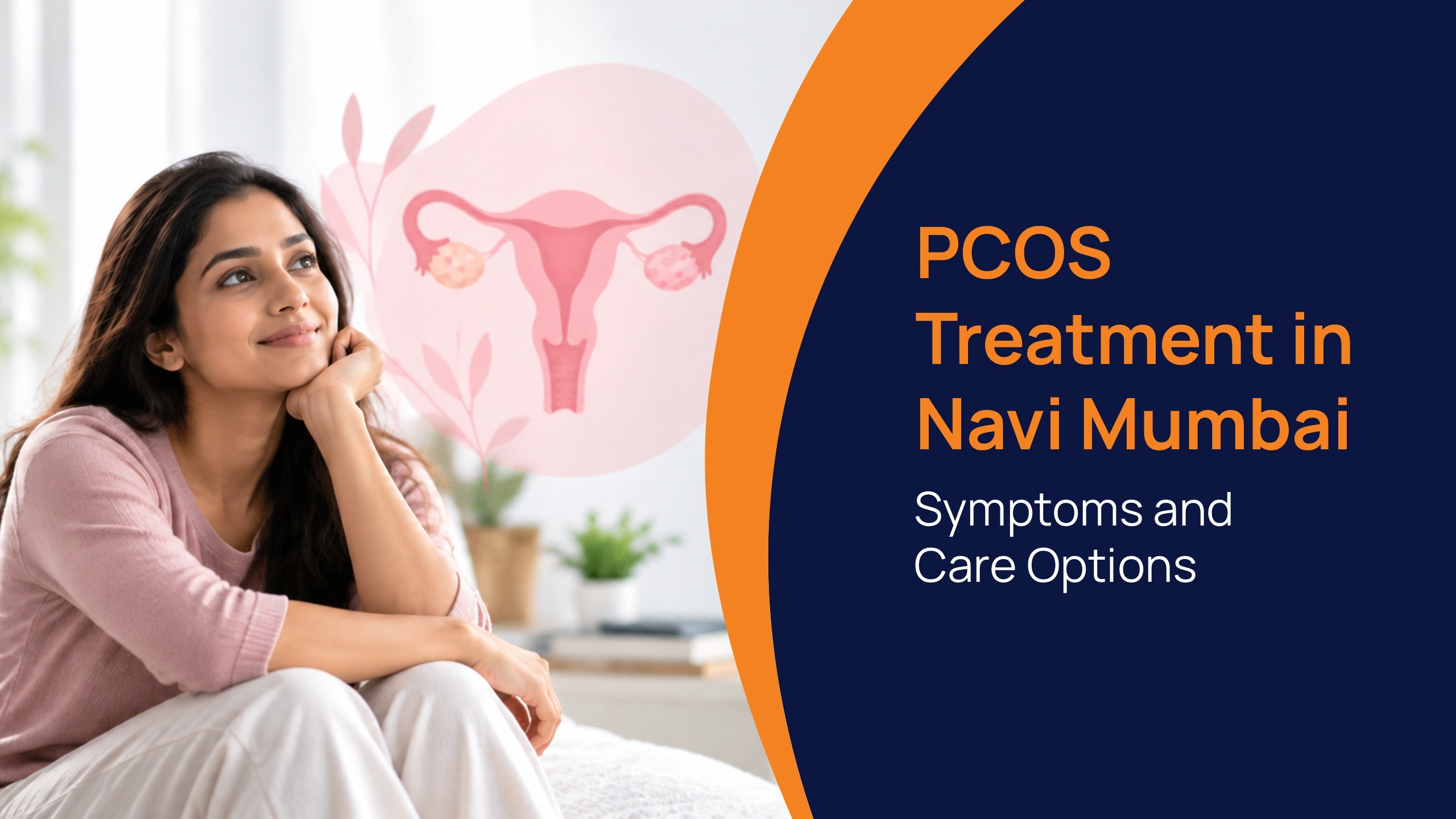
PCOS (polycystic ovary syndrome) is a hormone problem, and it is common. An Indian review of 11 studies found it in about 11 out of every 100 women of reproductive age (Bharali et al., Cureus 2022). The World Health Organization estimates that up to 70% of women with PCOS worldwide don’t know they have it.
PCOS has no permanent cure. It can still be controlled well with the right tests, medicines and daily habits. This guide explains the symptoms, how doctors confirm it, and the options for PCOS treatment in Navi Mumbai at Terna Hospital, Nerul.
Key takeaways
- PCOS affects roughly 1 in 10 Indian women of reproductive age.
- Common signs are irregular periods, acne, extra facial hair, hair thinning on the scalp, belly weight gain and trouble getting pregnant.
- Doctors diagnose it when you have two of these three: irregular periods, signs of high male hormones, and polycystic ovaries on ultrasound. You can have PCOS without any “cysts”.
- Treatment depends on your goal: regular periods, clearer skin, weight control or pregnancy.
- Untreated PCOS raises the risk of type 2 diabetes, high blood pressure and cancer of the uterus lining.
What is PCOS?
Polycystic ovary syndrome (PCOS) is a hormonal disorder in which the ovaries make more androgens (male hormones) than normal. This disturbs ovulation, so periods become irregular or stop. PCOS can also cause acne, extra hair growth, weight gain and difficulty getting pregnant.
The name confuses a lot of people. The “cysts” are actually small, immature follicles, eggs that started growing but were never released. They are not harmful growths, and they don’t need to be removed. Some women with PCOS have ovaries that look completely normal on a scan.
PCOS vs PCOD: is there a difference?
In India you will hear both words. Many websites say PCOD is a milder form of PCOS. In daily practice, doctors often use the two terms for the same condition, and international medical guidelines use only “PCOS”. The label matters less than your symptoms and reports. Your gynecologist will explain which pattern you have and what it means for you.
Common symptoms of PCOS
PCOS symptoms differ from woman to woman, and they can change with age. You may have only one or two of these.
Period problems
- Periods that come more than 35 days apart, or fewer than 8 periods in a year
- No periods for several months
- For some women, heavy, long or painful periods
Skin and hair changes
- Acne on the jawline, chin, chest or back, and oily skin
- Extra hair on the face, chest or stomach (doctors call this hirsutism)
- Thinning hair on the scalp
- Dark, velvety patches on the back of the neck or underarms, often a sign of insulin resistance
Weight, fertility and mood
- Weight gain around the belly that is hard to lose
- Difficulty getting pregnant, because the ovaries do not release an egg every month
- Anxiety, low mood or feeling bad about your body. The WHO lists these as common with PCOS, and they deserve attention too.
What causes PCOS?
The exact cause is not known. Two factors show up again and again.
Family history is the first. If your mother or sister has PCOS, or if type 2 diabetes runs in the family, your risk is higher.
Insulin resistance is the second. Your body needs more insulin than usual to control blood sugar. High insulin then pushes the ovaries to make more male hormones, which upsets ovulation. This is why PCOS and diabetes are so closely linked.
Long sitting hours, very little exercise and a diet heavy in maida, sugar and fried snacks don’t cause PCOS by themselves. They can make the symptoms worse.
How is PCOS diagnosed?
Doctors use the Rotterdam criteria. You are diagnosed with PCOS if you have at least two of the following, after other causes like thyroid problems are ruled out:
- Irregular or absent periods
- Signs of high androgens (acne, extra hair, scalp hair loss) or a high testosterone level in blood
- Polycystic ovaries on ultrasound
Your gynecologist will usually advise some of these tests:
| Test | What it checks |
| Pelvic ultrasound | Size of the ovaries, number of follicles, thickness of the uterus lining |
| Testosterone and other androgen tests | Level of male hormones |
| LH, FSH, prolactin, TSH | Rules out other hormone problems that look like PCOS |
| Fasting blood sugar, HbA1c or sugar tolerance test | Insulin resistance and diabetes |
| Lipid profile | Cholesterol and heart risk |
A practical tip: write down the start dates of your last three or four periods before your appointment. It helps the doctor more than you might expect.
For teenagers, doctors are careful. Irregular periods are normal for the first year or two after the first period, so a PCOS label is usually given only after watching the pattern for some time.
PCOS treatment options in Navi Mumbai
No single treatment suits everyone. Your plan depends on what troubles you most and whether you want to get pregnant soon.
Lifestyle changes: the first step for everyone
The WHO says healthy eating and regular activity help every woman with PCOS, even if the weighing scale does not move much. For women who are overweight, losing 5 to 10% of body weight often helps periods become more regular.
Small, Indian-kitchen changes work better than crash diets:
- Replace part of your white rice or maida with jowar, bajra, ragi or brown rice
- Add protein to every meal: dal, chana, sprouts, paneer, curd or eggs
- Cut down on sweets, packaged juice, biscuits and fried namkeen
- Walk briskly for 30 minutes on most days, or try yoga or cycling
- Sleep 7 to 8 hours; poor sleep makes sugar control harder
A dietitian from our nutrition and dietetics team can make a meal plan that fits your routine and family food.
Medicines for periods, acne and hair growth
- Hormonal pills (combined oral contraceptive pills) to regulate periods and reduce acne and extra hair
- Anti-androgen medicines for stubborn acne or hair growth
- Metformin, a diabetes medicine, for women with insulin resistance
Please take these only on a doctor’s prescription. Pills taken on a friend’s advice or directly from the chemist can hide symptoms and delay proper treatment.
Treatment if you want to get pregnant
Many women with PCOS conceive, some naturally and others with help. Options include:
- Ovulation medicines such as letrozole or clomiphene, with follicle-monitoring scans
- Laparoscopic ovarian drilling, a keyhole surgery, in selected cases
- IUI or IVF when simpler methods do not work
Women with PCOS have a higher chance of gestational diabetes and high blood pressure during pregnancy, so they need closer check-ups. Our obstetrics and gynaecology department handles high-risk pregnancies and has NICU support if the baby needs it.
Long-term health checks
PCOS continues after the reproductive years. A yearly check of blood sugar, blood pressure and cholesterol catches problems early. Our health checkup packages cover most of these tests in one visit.
When should you see a gynecologist?
Book an appointment if:
- Your periods have been irregular for more than six months
- You have not had a period for three months and you are not pregnant
- You have been trying to conceive for a year (six months if you are over 35)
- You notice new facial hair or sudden hair loss
- You have very heavy bleeding. This needs a doctor the same day.
PCOS care at Terna Hospital, Navi Mumbai
Terna Speciality Hospital & Research Centre is an NABH-accredited hospital opposite Nerul Railway Station. Women come here for PCOS care from Nerul, Vashi, Seawoods, Belapur, Kharghar and Panvel.
Here is what you get in one place:
- Experienced gynaecologists in Navi Mumbai who treat PCOS, infertility, and high-risk pregnancy
- Pelvic ultrasound and colour Doppler in the radiology department
- A pathology lab open 24×7 for hormone and sugar tests
- Dietitians, dermatologists, and psychiatrists when your plan needs them
- Fertility counsellors for couples going through treatment
- A hospital with 200+ doctors across 20+ specialities, so any other health issue is handled in the same building
You can view profiles of our OBGY specialists before booking.
: Summary
PCOS is common in Indian women and often goes unnoticed for years. If your periods are irregular, or you have acne, unwanted hair or trouble conceiving, get it checked early. A few blood tests and an ultrasound can confirm it. After that, a plan built around your own goal, regular periods or a baby, keeps PCOS in control. Yearly check-ups protect your health long after the reproductive years.
Visit the best gynecologist at Terna Hospital, Navi Mumbai. Enquire now and consult our specialists.
Still have lingering questions? Let’s address the most common ones patients ask.
Is PCOS curable?
No. There is no permanent cure for PCOS today. With treatment and healthy habits, most women control their symptoms well, get regular periods and lower their long-term health risks.
Can PCOS occur in teenagers?
Yes. PCOS may become apparent during adolescence. However, menstrual irregularity is also common during the early years after periods begin, so diagnosis in teenagers requires careful assessment.
Can thin women have PCOS?
Yes. PCOS can occur in people across different body sizes. Weight alone does not determine whether someone has PCOS.
Is PCOS the same as PCOD?
Most doctors in India use the two terms for the same condition. International guidelines use only “PCOS”. Your treatment depends on your symptoms and reports, not on the name.
Does PCOS go away after marriage or pregnancy?
No. This is a common belief in Indian families, but PCOS is a long-term condition. Symptoms may change after pregnancy or with age, but regular check-ups are still needed.
Disclaimer: The information provided on this blog is for general educational purposes only and should not be considered a substitute for professional medical advice, diagnosis, or treatment. Always consult a qualified healthcare professional for advice.