
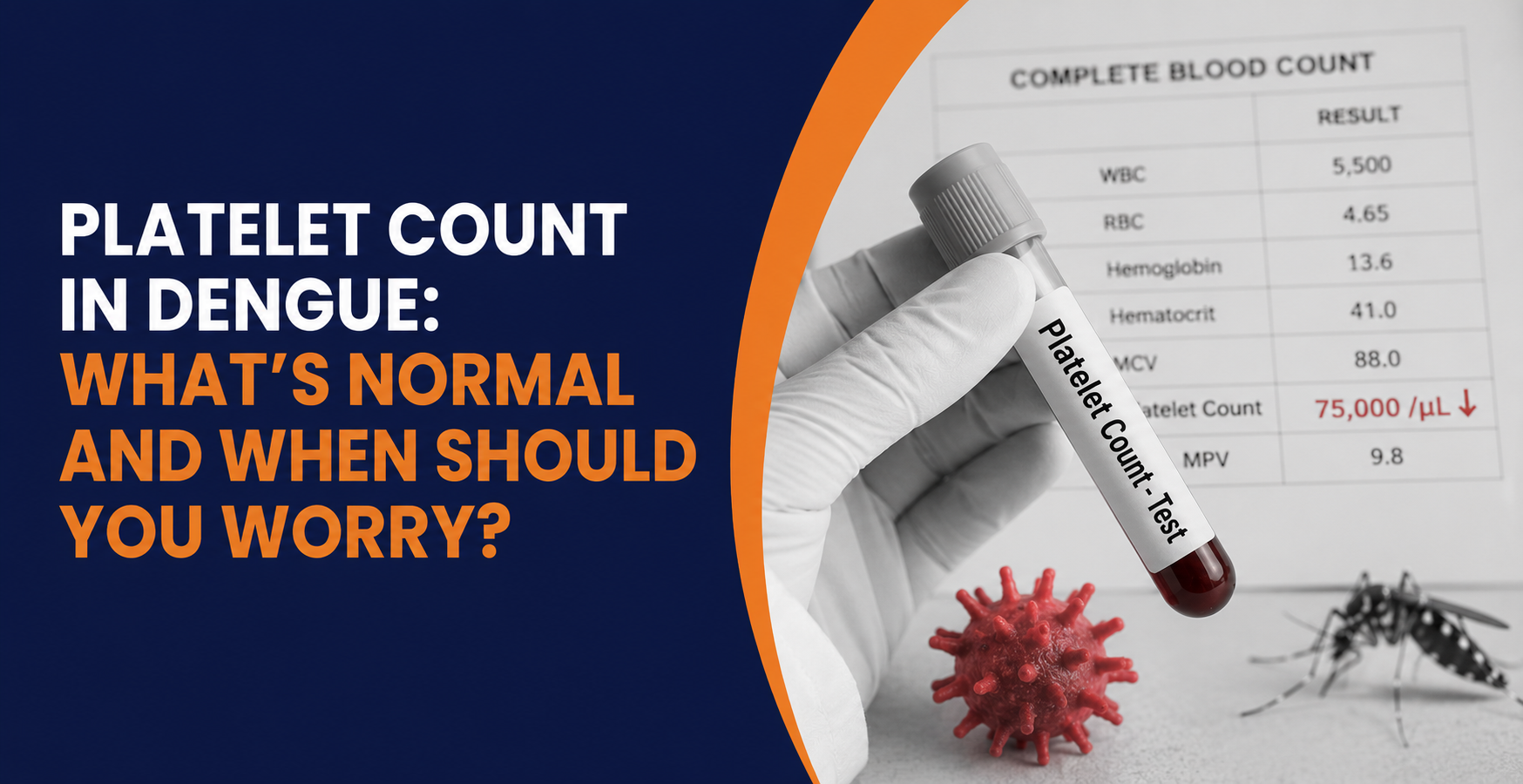
The first thing most people do after a dengue diagnosis is start Googling their platelet count report, and the number on its own rarely means much without context. A count that sounds alarming on day two of fever can be completely expected at that stage, while the same number recovering slowly a week in tells a different story. This guide walks through what the number actually means, when it genuinely calls for concern, and where common home remedies fit into the picture.
What Is a Platelet Count?
Platelets are small, disc-shaped blood cells produced in the bone marrow, and their main job is clotting. Whenever a blood vessel is injured, platelets clump together at the site to stop bleeding and start the repair process. A healthy platelet count keeps this clotting system working reliably in the background, without you ever noticing it. It only becomes relevant once the count moves outside its normal range, since both very low and very high counts can affect how well blood clots.
Why Does Platelet Count Drop in Dengue?
Dengue affects platelets through more than one mechanism at once. The infection triggers an immune response that targets platelets alongside the virus itself, increasing their destruction in the bloodstream. At the same time, dengue temporarily suppresses the bone marrow’s platelet production, so fewer new platelets are being made just as existing ones are being cleared faster than usual. This combination, faster destruction plus slower production, is why platelet count tends to fall quickly during the middle days of the illness and why it is one of the most consistent lab markers doctors track in suspected dengue.
What Is the Normal Platelet Count Range?
| Platelet Count | Meaning |
| 150,000–450,000/µL | Normal |
| 100,000–150,000/µL | Mild decrease |
| 50,000–100,000/µL | Requires close monitoring |
| 20,000–50,000/µL | High risk of complications |
| Below 20,000/µL | Medical emergency |
The platelet count alone does not determine how severe dengue is. Doctors also consider symptoms, bleeding, hydration status, blood pressure, and other blood test results before deciding on treatment. A number on a report is a data point, not a diagnosis by itself, and treating it as the whole picture is one of the more common sources of unnecessary panic during dengue.
Platelet Count in Dengue: What the Numbers Mean
150,000 to 450,000/µL is a normal count and, on its own, no immediate concern in a dengue patient.
100,000 to 150,000/µL is a mild decrease. This is common in the early days of dengue and usually only needs observation, without any change in treatment.
50,000 to 100,000/µL needs regular monitoring. A repeat complete blood count is typically advised, often daily, to track whether the count is still falling or has started to stabilize.
20,000 to 50,000/µL carries a higher risk of complications. Hospital admission may be required at this stage, depending on whether bleeding signs, hydration status or other symptoms are also present.
Below 20,000/µL carries a high bleeding risk and is generally treated as a threshold for immediate medical attention, since the margin for spontaneous bleeding increases significantly at this level.
Is a Low Platelet Count Always Dangerous?
Not necessarily, and this is where a lot of unnecessary fear comes from. Not everyone with a count of 40,000 needs a transfusion or is in immediate danger. Someone with 80,000 platelets who has active bleeding or a rapid fall in blood pressure can be more serious than someone with a lower count who is otherwise stable. Doctors treat the patient in front of them, not just the number on the report, weighing the trend, symptoms and overall clinical picture together rather than reacting to a single figure in isolation.
When Should You Go to the Hospital?
Certain signs mean it is time to seek medical attention the same day rather than wait for the next scheduled blood test:
- Bleeding gums
- Nosebleeds
- Blood in stool
- Persistent vomiting
- Severe abdominal pain
- Dizziness
- Extreme weakness
- Difficulty breathing
Any one of these alongside a known or suspected dengue infection is worth an immediate call to your doctor or a same-day hospital visit, regardless of what the last platelet count reading was.
Do You Always Need a Platelet Transfusion?
A common assumption is that a low platelet count automatically means a transfusion is needed. In practice, platelet transfusion is not routinely recommended for most dengue patients, since the body typically replenishes platelets on its own as the infection resolves. Doctors usually consider a transfusion only in specific situations: active bleeding, an extremely low platelet count alongside other warning signs, or a clear clinical need identified during monitoring. A low number by itself, without bleeding or other complications, is often managed with continued observation rather than transfusion.
Can Food or Papaya Leaf Juice Increase Platelets?
This is one of the most searched questions during dengue season in India, and it deserves a clear answer. Papaya leaf extract, kiwi, goat milk and coconut water are all commonly believed to boost platelet count quickly. Evidence for papaya leaf extract remains limited and inconclusive, not strong enough to replace medical monitoring or treatment, and goat milk has no reliable scientific backing at all.
What genuinely helps is straightforward supportive care: staying well hydrated, eating a balanced diet with adequate protein, and getting enough rest. Coconut water and fruits like kiwi are reasonable, nutritious choices during recovery, but they work as general nutritional support, not a fast-acting platelet booster. No food or juice can rapidly increase platelet count. Good nutrition supports recovery, but it is not a replacement for medical treatment, and relying on a home remedy instead of following up with blood tests can delay noticing a count that is still falling.
How Long Does It Take for Platelets to Recover?
Platelet count typically follows a predictable pattern through the illness. In the first one to three days of high fever during monsoon the count is often still near normal or only mildly reduced. It tends to reach its lowest point around day four to six, which is also when monitoring is most frequent. Recovery usually begins once the fever settles, and the count generally returns to a normal range within about seven to ten days from the start of the illness, though this varies from patient to patient depending on age, overall health and how the illness progressed.
Dengue Testing and Treatment in Navi Mumbai
Terna Speciality Hospital & Research Centre provides evaluation, dengue testing and platelet monitoring in Nerul, Navi Mumbai. The Internal Medicine team assesses patients based on their symptoms, day of illness, CBC and pathology test results and overall condition.
Patients from Nerul, Seawoods, Sanpada, Vashi, Juinagar, CBD Belapur and Kharghar can access diagnostic services and medical support. Patients with bleeding, breathing difficulty, severe abdominal pain or other warning signs should visit the hospital’s 24/7 Accident and Emergency Department without delay.
Contact Terna Hospital:
+91 96194 88802
+91 96194 88818
Worried about monsoon-related illnesses? Enquire now and consult our specialists.
Still have lingering questions? Let’s address the most common ones patients ask.
Can platelet count recover naturally?
Yes. In the large majority of dengue cases, platelet count recovers on its own as the infection resolves, without needing a transfusion.
How often should platelet count be checked?
During the critical phase of dengue, a complete blood count is typically repeated daily, and sometimes more often if the count is falling quickly or warning signs are present. Frequency usually reduces once the count shows a clear upward trend.
Does every dengue patient need hospital admission?
No. Many dengue cases are managed with outpatient monitoring, rest, hydration and regular blood tests. Admission is generally considered when platelet counts fall to concerning levels, when bleeding or other warning signs appear, or when a patient is in a higher-risk group.
What foods help during dengue recovery?
A balanced diet with adequate protein, good hydration, and fruits like papaya and kiwi support general recovery, though no specific food increases platelet count quickly or replaces medical monitoring.
Is papaya leaf juice scientifically proven to raise platelets?
The evidence remains limited and inconclusive. It is a widely used home remedy in India, but it should not replace regular blood testing or medical advice during dengue.
How long does platelet recovery take?
Most patients see platelet count return to a normal range within seven to ten days from the start of the illness, though timing varies based on the individual patient and how the illness progressed.
Can platelet count drop after the fever goes away?
It can continue falling briefly even as fever settles, since the platelet count typically lags a day or two behind the fever curve
Disclaimer: The information shared in this content is for educational purposes only and not for promotional use.