
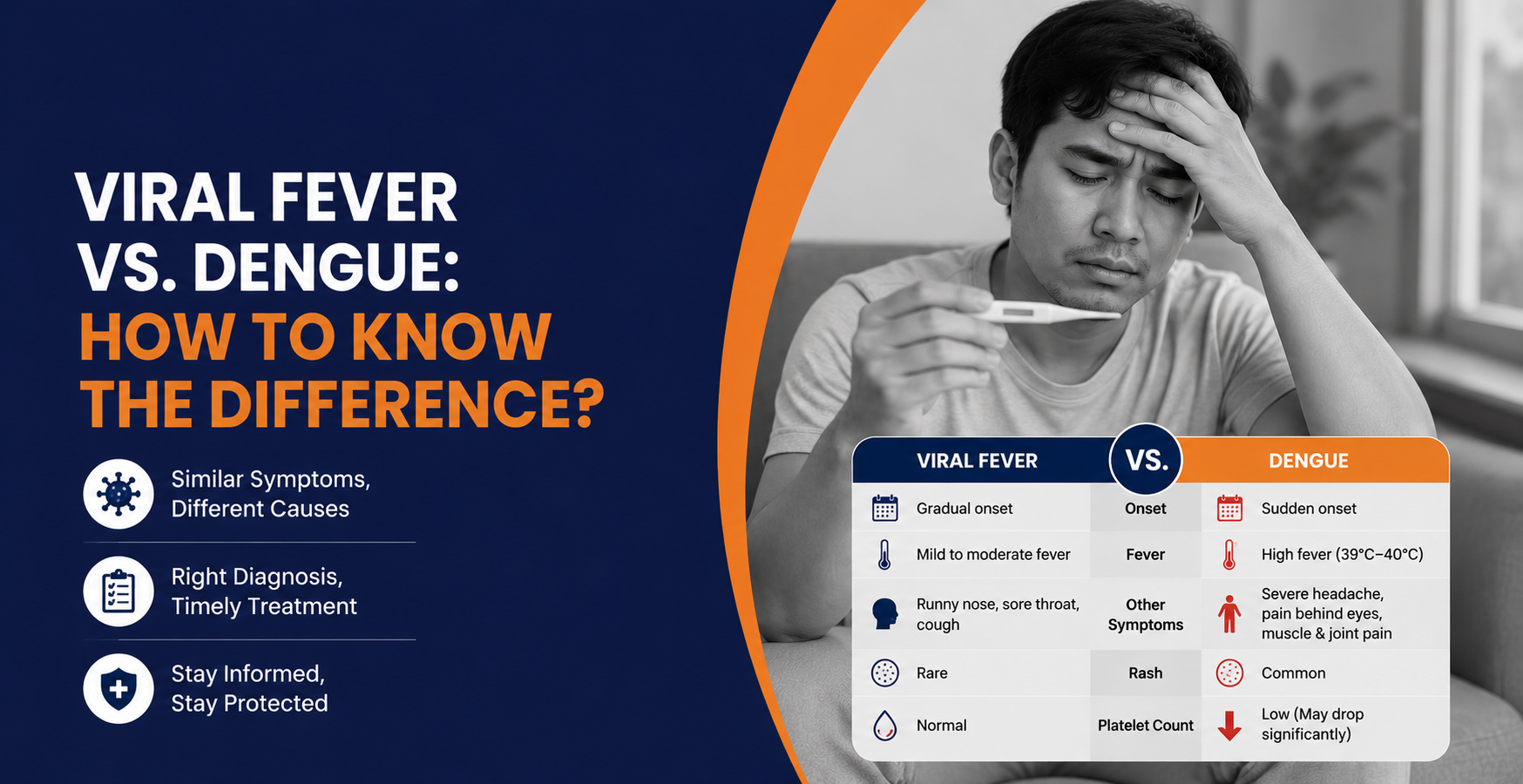
During monsoon, OPDs across Navi Mumbai see the same scene repeat itself. A fever starts out looking like any other cold or flu, and a few days later turns out to be dengue. In the early stage, viral fever and dengue can look nearly identical, since both bring a sudden fever, body ache and fatigue, and that overlap is exactly why so many people wait too long before getting a blood test. Knowing where the two conditions actually diverge, in symptom pattern, severity and specific warning signs, is the fastest way to tell when a fever needs more than rest and paracetamol.
What Is Viral Fever?
Viral fever is a general term for fever caused by a viral infection, most often linked to the common cold, flu or other seasonal viruses that spread more easily in monsoon’s humid conditions. It typically brings a mild to moderate temperature, sore throat, cold, body ache and fatigue, and usually resolves on its own within five to seven days with rest, fluids and standard fever medication. Most cases do not need specific testing, since the illness runs a predictable, self-limiting course.
What Is Dengue Fever?
Dengue is caused by the dengue virus, spread through the bite of an infected Aedes mosquito, which breeds in clean, stagnant water such as flower pots, coolers and construction sites, all common across Navi Mumbai during monsoon. Unlike viral fever, dengue tends to bring a sudden, high fever along with more specific symptoms: severe headache, pain behind the eyes, intense joint and muscle pain, and a rash that can appear a few days into the illness. In a subset of cases, dengue can progress to a more serious stage marked by a sharp drop in platelet count, which is why it needs closer monitoring than an ordinary viral fever.
Viral Fever vs Dengue: Key Symptom Differences
The table below summarizes how the two conditions typically differ once a pattern emerges over the first two to three days.
| Symptom | Viral Fever | Dengue Fever |
| Onset | Gradual | Sudden, high fever |
| Fever range | Mild to moderate | Often above 104°F |
| Body pain | Mild ache | Severe joint and muscle pain |
| Headache | Mild | Severe, with pain behind the eyes |
| Rash | Uncommon | Can appear around day 3 to 5 |
| Platelet count | Normal | Drops, needs monitoring |
| Typical duration | 5 to 7 days | 7 to 10 days, longer recovery |
| Bleeding signs | Absent | Gums, bruising, nosebleeds possible |
A fever that climbs quickly rather than gradually, combined with pain behind the eyes or a rash, leans more toward dengue, but symptom-watching alone is not reliable in the first 48 hours. A blood test remains the only way to confirm the diagnosis with certainty.
Why Platelet Count Matters in Dengue
A dropping platelet count is one of the clearest markers separating dengue from a routine viral fever, and it is also the reason doctors recommend repeat blood tests rather than a single reading. Platelet levels can fall over the first few days of dengue and then recover as the illness resolves, so tracking the trend matters more than any one number in isolation. A count that falls to concerning levels, or comes with bleeding gums, easy bruising or nosebleeds, is a signal that hospitalization and closer monitoring may be needed. This is also why self-medicating a high fever during monsoon, particularly with aspirin or ibuprofen, carries real risk, since both can worsen bleeding tendency if dengue turns out to be the underlying cause.
High Fever in Monsoon: When to Get Tested
Not every monsoon fever needs an immediate hospital visit, but certain signs mean it is time to stop waiting and watching. Get tested the same day if the fever crosses three days without improving, if it does not respond to standard fever medication within 24 hours, if there is bleeding from the gums or nose or blood in vomit or stool, if the person feels unusually weak, dizzy or confused, or if joint and muscle pain becomes severe enough to limit movement. For children, elderly family members, pregnant women and anyone with a pre-existing condition such as diabetes, the threshold for testing should be lower, since these groups face a higher risk of complications.
Diagnosis: Tests That Confirm the Difference
A doctor typically starts with a physical examination and a history of recent symptoms and possible mosquito exposure before ordering tests. The two most common tests for suspected dengue are the NS1 antigen test, which can detect the virus within the first few days of fever, and an IgM or IgG antibody test, more useful after day five. A complete blood count checks platelet and white cell levels and is usually repeated over a few days to track the trend rather than relying on a single result. One detail worth knowing is that a negative dengue test in the first two to three days does not always rule it out, since antibody levels take time to rise, and a repeat test a few days later may be recommended if symptoms persist.
Treatment Approach for Each
Viral fever is managed with rest, fluids and paracetamol for fever and body ache, and typically does not need any further intervention. Dengue treatment is largely supportive too, centered on hydration, fever management and close platelet monitoring, since there is no specific antiviral cure for the infection itself. Hospitalization is recommended if platelet counts drop to concerning levels, if warning signs such as persistent vomiting or abdominal pain appear, or if the person shows signs of dehydration that oral fluids are not managing. Terna Speciality Hospital’s Internal Medicine team manages the full range of monsoon fever cases, from initial diagnosis through recovery, with inpatient support available for cases that need admission.
Prevention Tips
Since dengue spreads through mosquito bites rather than person to person contact, prevention centers on reducing mosquito breeding and bites around the home.
- Empty and clean containers that collect standing water, such as flower pots, coolers and buckets, at least once a week.
- Use mosquito repellent and nets, particularly around dawn and dusk when Aedes mosquitoes are most active.
- Keep doors and windows screened where possible, and avoid letting water stagnate in unused containers or on terraces.
- Wear full-sleeved clothing during peak mosquito activity hours if you are spending time outdoors.
Why Choose Terna Speciality Hospital, Navi Mumbai?
Terna Speciality Hospital brings Internal Medicine, diagnostics and emergency care together under one roof in Nerul, which matters most during monsoon, when a fever could turn out to be anything from a routine viral infection to dengue. On-site testing means NS1 antigen and platelet count results typically come back without the delay of sending samples to an outside lab, shortening the time between noticing a fever and knowing what it actually is. The hospital’s emergency department is equipped to handle warning-sign cases immediately rather than requiring a next-day appointment, and for patients who need admission for platelet monitoring or IV fluids, the same Internal Medicine team that made the diagnosis continues managing the case through to recovery. For families in Nerul and the surrounding Navi Mumbai neighborhoods, having diagnosis, testing and treatment available from one team removes the back and forth that often costs the most time during a monsoon fever.
If you’re in Navi Mumbai, Vashi, Nerul or anywhere close by, good care doesn’t have to mean a long trip across the city. Terna Speciality Hospital & Research Centre brings experienced doctors, attentive medical staff and affordable treatment together right here, so a fever never has to wait longer than it should.
.
Worried about seasonal fever? Enquire now and consult our specialists.
Still have lingering questions? Let’s address the most common ones patients ask.
How can I tell viral fever and dengue apart in the first two days?
In the earliest stage, the two can look nearly identical. Pain behind the eyes, a fever that climbs quickly, and severe body ache lean more toward dengue, but a blood test is the only reliable way to confirm it this early.
Is paracetamol safe if I suspect dengue?
Paracetamol is generally considered safe for fever in suspected dengue. Aspirin and ibuprofen should be avoided until dengue is ruled out, since both can increase bleeding risk.
How long does dengue fever last compared to viral fever?
Viral fever usually resolves within five to seven days. Dengue typically runs its course in seven to ten days, with platelet recovery sometimes taking a few days longer.
Can dengue be mild enough to go unnoticed?
Yes. A number of dengue infections cause few or mild symptoms, which is why testing is more reliable than watching for symptoms alone, especially during a local outbreak.
When should I go to the emergency department instead of a regular consultation?
Go immediately for bleeding from the gums or nose, repeated vomiting, severe abdominal pain, confusion, or a fever that does not respond to medication within a day. These can signal a complication that needs urgent care rather than a scheduled appointment.
Disclaimer: The information shared in this content is for educational purposes only and not for promotional use.