
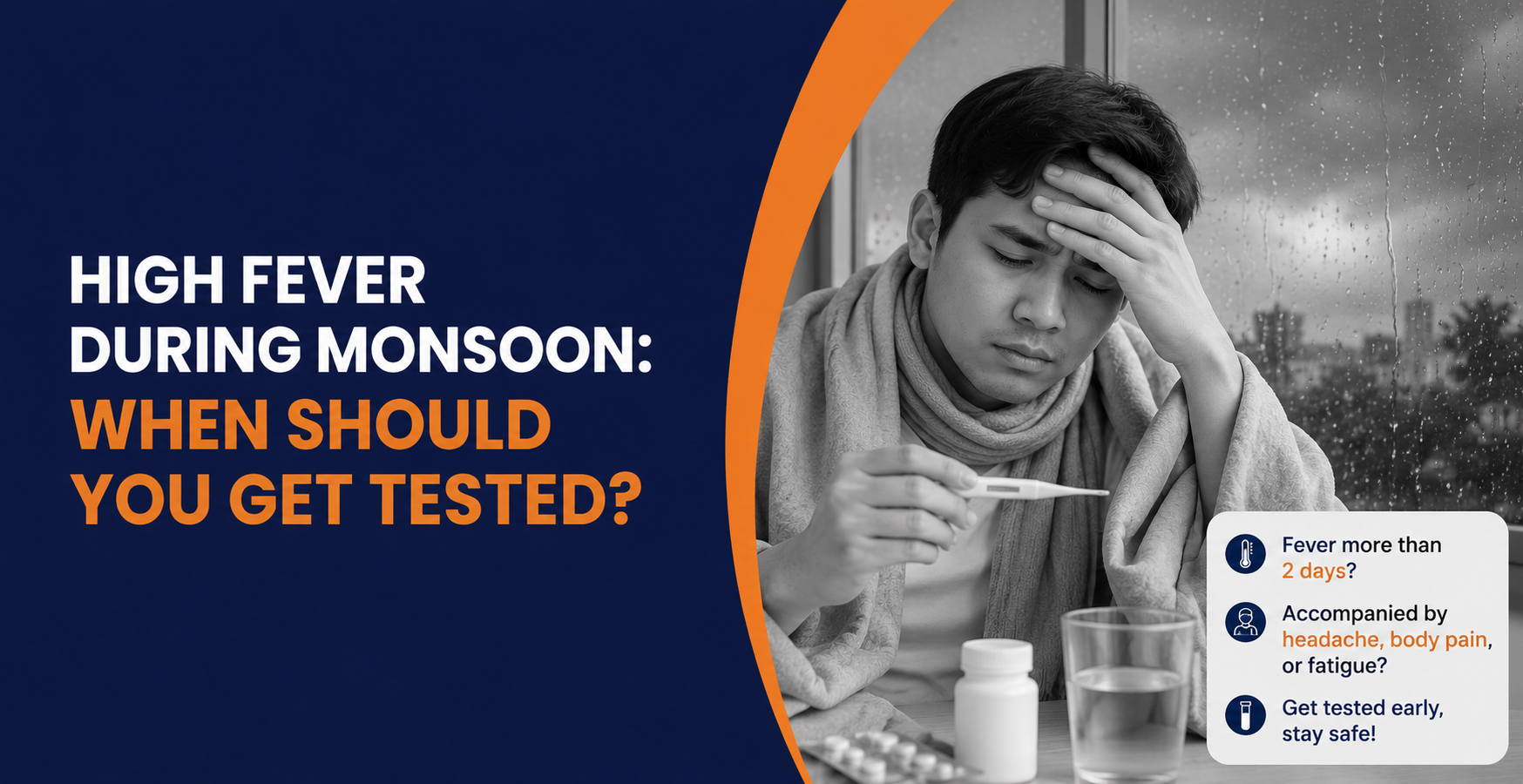
Monsoon often brings relief from the summer heat, but it also marks the beginning of fever season. Someone at home wakes up with a fever, and for the first day or two, it usually doesn’t seem alarming. Many people assume it’s just another seasonal viral infection.
The real concern begins on the second or third day. Should you continue resting at home with fluids and paracetamol, or is it time to get a blood test?
Most monsoon fevers are caused by viral infections and improve within a few days. However, some may be early signs of dengue, malaria, or other mosquito-borne illnesses that require timely diagnosis and treatment. Knowing when to seek medical attention can help prevent complications and ensure faster recovery.
Common Causes of High Fever During Monsoon
A rise in fever cases during the monsoon is common. Waterlogging, high humidity, and stagnant water create ideal breeding conditions for mosquitoes, while contaminated food and water increase the risk of bacterial infections.
Some of the most common causes of fever during this season include:
- Viral infections such as the common cold and influenza
- Dengue fever
- Malaria
- Typhoid
- Leptospirosis, especially after exposure to contaminated floodwater
During the first 24 to 48 hours, many of these illnesses can present with similar symptoms, making it difficult to identify the exact cause based on symptoms alone.
Monsoon Fever Symptoms: What’s Normal and What’s Not
A typical viral fever usually causes a mild to moderate temperature, body aches, sore throat, runny nose, and fatigue. With adequate rest, hydration, and medication, it generally improves within five to seven days.
However, some symptoms should never be ignored. A fever that rises rapidly, remains above 102°F, or returns after initially improving deserves medical attention. Similarly, severe headache, pain behind the eyes, intense muscle or joint pain, unusual weakness, or a skin rash are warning signs that should not be overlooked.
While these symptoms alone cannot confirm the cause, they are strong enough to warrant a medical evaluation and appropriate testing.
Dengue Warning Signs You Should Not Ignore
Dengue often presents differently from a typical viral fever. Along with a sudden high fever sometimes above 104°F it may cause:
- Severe headache
- Pain behind the eyes
- Intense muscle and joint pain
- Skin rash appearing around the third to fifth day
- Extreme fatigue
One of the most important features doctors monitor in dengue is a falling platelet count, which is why blood tests play a vital role in diagnosis and follow-up.
Seek immediate medical attention if you experience:
- Bleeding from the gums or nose
- Blood in vomit or stool
- Persistent vomiting
- Severe abdominal pain
- Dizziness or confusion
- Extreme weakness
These symptoms may indicate a more serious stage of dengue and require urgent medical care.
When Should You Get Tested?
Not every fever requires immediate testing, but certain situations should prompt you to consult a doctor without delay.
You should get tested if:
- Your fever lasts longer than three days without improving.
- The fever does not respond to medication within 24 hours.
- You experience severe body pain, rash, bleeding, or persistent vomiting.
- Your symptoms become worse instead of improving.
- You have recently been exposed to mosquito-prone or flood-affected areas.
Children, older adults, pregnant women, and people living with conditions such as diabetes should consider getting tested earlier, as they have a higher risk of developing complications.
If you’re unsure, it’s always better to consult a doctor. A simple consultation and blood test can provide answers much sooner than waiting and hoping the fever settles on its own.
What to Expect When You Get Tested
Your doctor will begin by asking about your symptoms, recent travel, exposure to mosquitoes or floodwater, and your medical history. A physical examination helps narrow down the possible causes before laboratory tests are recommended.
Depending on your symptoms, your doctor may advise:
- NS1 Antigen Test – Detects dengue during the first few days of illness.
- Dengue IgM/IgG Antibody Test – More useful after the fifth day of fever.
- Complete Blood Count (CBC) – Monitors platelet levels and white blood cell count.
One important point to remember is that a negative dengue test during the first two or three days does not always rule out dengue. If symptoms continue, your doctor may recommend repeating the test after a few days.
Why Waiting Too Long Can Be Risky
Most monsoon fevers resolve without complications. However, delaying medical attention when warning signs appear can allow a serious illness to progress unnoticed.
Dengue can quickly advance to a stage where platelet counts fall significantly, increasing the risk of bleeding and dehydration. Malaria and typhoid can also become more serious if treatment is delayed.
As a general rule, most viral fevers begin to improve within three days. If your fever persists beyond that or your symptoms worsen, it’s time to seek medical advice rather than continuing to wait.
Getting Tested at Terna Speciality Hospital & Research Centre
For families across Navi Mumbai, including Nerul, Vashi, Sanpada, Seawoods, Kharghar, and CBD Belapur, Terna Specialty Hospital & Research Centre offers comprehensive evaluation for monsoon-related illnesses.
The hospital provides pathology on-site testing for dengue, malaria, and other fever-related conditions, allowing results to be processed quickly without the need to send samples to an external laboratory.
The Internal Medicine team evaluates each patient thoroughly and continues to provide care throughout recovery if admission or close monitoring becomes necessary. The emergency department is also equipped to manage patients who require immediate medical attention.
Conclusion
Most monsoon fevers are mild and improve with rest, hydration, and proper care. However, persistent fever or symptoms such as severe body pain, rash, bleeding, or persistent vomiting should never be ignored.
Early diagnosis is the key to preventing complications. If your fever lasts longer than two to three days or you’re concerned about your symptoms, consult an internal medicine specialist without delay. Timely evaluation and the right treatment can make all the difference to your recovery.
Worried about monsoon-related illnesses? Enquire now and consult our specialists.
Still have lingering questions? Let’s address the most common ones patients ask.
Can a viral fever turn into dengue?
No. Viral fever and dengue are caused by different viruses, so one does not develop into the other. They are often confused because both illnesses can look similar during the first few days.
Is it possible to have dengue with only a mild fever?
Yes. Some people develop only mild symptoms, especially if they have had dengue before. That’s why laboratory testing is more reliable than judging the illness based on symptoms alone.
What is the fastest test to confirm dengue?
The NS1 Antigen Test is generally the earliest and fastest test for detecting dengue during the first few days of fever.
Should I get tested even if my fever isn't very high?
Yes. Fever intensity alone doesn’t determine how serious an illness is. If your fever is accompanied by severe body pain, a rash, pain behind the eyes, or other warning signs, you should consult a doctor.
Disclaimer: The information shared in this content is for educational purposes only and not for promotional use.