
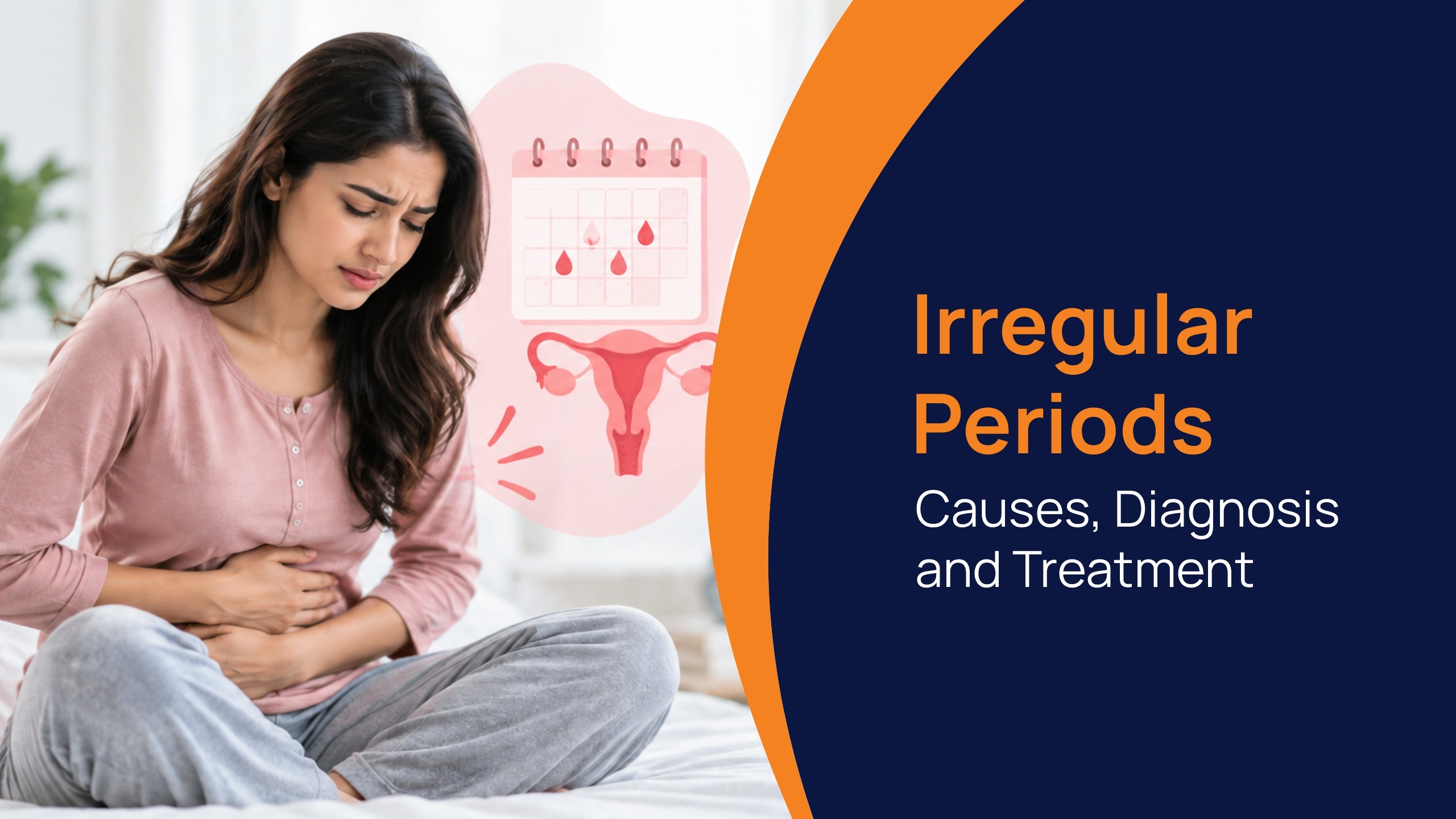
Menstrual cycles can vary naturally, but persistent changes in the timing, duration or flow of periods may need attention. Understanding your usual cycle can help you recognise when a change is worth discussing with a healthcare professional.
Irregular periods can occur at different stages of life and may be linked to hormonal changes, pregnancy, stress, certain medicines, or underlying health conditions. Finding the reason behind the change is important because treatment depends on the cause.
What Are Irregular Periods?
An irregular menstrual cycle means that your periods do not follow your usual pattern. The change may involve how often your period comes, how long bleeding lasts or how heavy the bleeding is.
Examples include:
- Periods that repeatedly come earlier or later than expected
- Missing periods
- Significant changes in bleeding duration
- Very heavy or unusually light bleeding
- Bleeding between periods
Cycle patterns can also naturally change during puberty, after pregnancy and during the years approaching menopause.
What Causes Irregular Periods?
There are several possible causes, and more than one factor may sometimes be involved.
Hormonal Changes
Changes in reproductive hormones can affect ovulation and alter the timing of periods. This is common during puberty and perimenopause.
Polycystic Ovary Syndrome (PCOS)
PCOS can interfere with regular ovulation and may result in fewer or unpredictable periods. Some people may also experience acne, increased facial or body hair or weight-related changes.
Thyroid Disorders
The thyroid helps regulate several body functions, including processes that can influence the menstrual cycle. Both an underactive and overactive thyroid can be associated with menstrual changes.
Pregnancy
A missed period may be an early sign of pregnancy. If pregnancy is possible, testing can help clarify the reason for the missed period.
Stress and Lifestyle Changes
Significant stress, rapid changes in weight, excessive physical activity, or major changes in routine may affect menstrual regularity.
Medicines and Contraception
Some medicines and hormonal contraceptives can change the frequency or amount of menstrual bleeding.
How Are Irregular Periods Diagnosed?
Diagnosis is based on your symptoms, menstrual history and overall health rather than one standard test for everyone.
Menstrual History
A gynaecologist may ask about:
- When your periods became irregular
- Your usual cycle pattern
- Duration and amount of bleeding
- Pain or bleeding between periods
- Medicines and contraception
- Recent weight, exercise or lifestyle changes
Keeping a period record before your appointment can make this discussion easier.
Pregnancy Testing
If pregnancy is possible, a pregnancy test may be recommended when a period is missed or unexpectedly delayed.
Blood Tests
Depending on your symptoms, your doctor may recommend tests to assess conditions such as thyroid or other hormonal problems.
Ultrasound
An ultrasound may be suggested when the doctor needs to examine the uterus or ovaries or investigate a possible structural or hormonal cause.
Not everyone with irregular periods requires every test. The evaluation is selected according to individual symptoms and medical history.
How Are Irregular Periods Treated?
Treatment is based on the underlying cause and whether the menstrual changes are affecting your health or quality of life.
Depending on the situation, management may involve:
- Treating an underlying medical or hormonal condition
- Managing symptoms associated with PCOS
- Reviewing medicines or contraception
- Addressing significant lifestyle factors
- Using hormonal treatment when medically appropriate
- Treating heavy or abnormal bleeding
Some people may only need monitoring, particularly when the changes are temporary or related to a normal stage of life.
Can Irregular Periods Affect Fertility?
Irregular periods do not necessarily mean that a person cannot become pregnant.
However, irregular cycles can sometimes indicate that ovulation is not happening regularly. If you are trying to conceive, your doctor may evaluate ovulation and look for possible underlying causes.
The treatment will depend on the findings rather than the irregular cycle alone.
How Can You Track Your Periods?
Tracking your menstrual cycle can help identify patterns that may otherwise be difficult to remember.
Record:
- The first day of each period
- Number of days of bleeding
- Changes in flow
- Pain or other symptoms
- Bleeding between periods
- Any major changes in weight, exercise or stress
You can use a calendar, diary or period-tracking application.
When Should You Talk to a Doctor?
Consider speaking with a gynaecologist if your periods have become persistently unpredictable or you notice a significant change from your usual pattern.
Medical evaluation is particularly important if you experience:
- Repeatedly missed periods
- Very heavy bleeding
- Bleeding between periods or after sex
- Significant pelvic or menstrual pain
- Irregular periods along with unusual hair growth or persistent acne
- Difficulty becoming pregnant
Sudden or severe symptoms may require more prompt medical attention.
Gynaecology Care at Terna Speciality Hospital & Research Centre
Terna Speciality Hospital & Research Centre, Navi Mumbai provides healthcare services across multiple medical specialties, including Gynaecology.
Women experiencing persistent menstrual changes can consult a gynaecologist for assessment, appropriate investigations and guidance based on their individual symptoms.
Final Takeaway
Changes in your menstrual pattern can have different explanations. Tracking your cycle and paying attention to persistent changes can help you recognise when professional evaluation may be useful.
The right treatment depends on the underlying cause, so persistent menstrual changes should be assessed rather than self-treated.
Consult Terna Speciality Hospital & Research Centre
If you have ongoing concerns about your menstrual cycle, consult the Gynaecology team at Terna Speciality Hospital & Research Centre, Navi Mumbai for appropriate evaluation and guidance.
Visit the obstetrics & gynecology Specialist at Terna Hospital, Navi Mumbai. Enquire now or book your appointment.
Still have lingering questions? Let’s address the most common ones patients ask.
How can I know if my periods are irregular?
Compare your current cycles with your usual pattern. Repeated changes in timing, bleeding duration or flow can indicate an irregular menstrual pattern.
Can irregular periods become regular again?
Yes. In some cases, periods become regular once the underlying factor is addressed. The outcome depends on the reason for the irregularity.
Can I have irregular periods without PCOS?
Yes. PCOS is only one possible cause. Stress, thyroid disorders, pregnancy, lifestyle changes, medicines and different stages of reproductive life can also affect menstrual cycles.
Does every irregular period require treatment?
No. Treatment is not always necessary. A healthcare professional can determine whether monitoring or treatment is appropriate based on the cause and symptoms.
Should I track my periods before seeing a gynaecologist?
Yes. Recording your period dates, bleeding pattern and associated symptoms can provide useful information during a consultation.
Disclaimer: The information provided on this blog is for general educational purposes only and should not be considered a substitute for professional medical advice, diagnosis, or treatment. Always consult a qualified healthcare professional for advice.