
Angiography vs. Angioplasty: What Is the Difference?
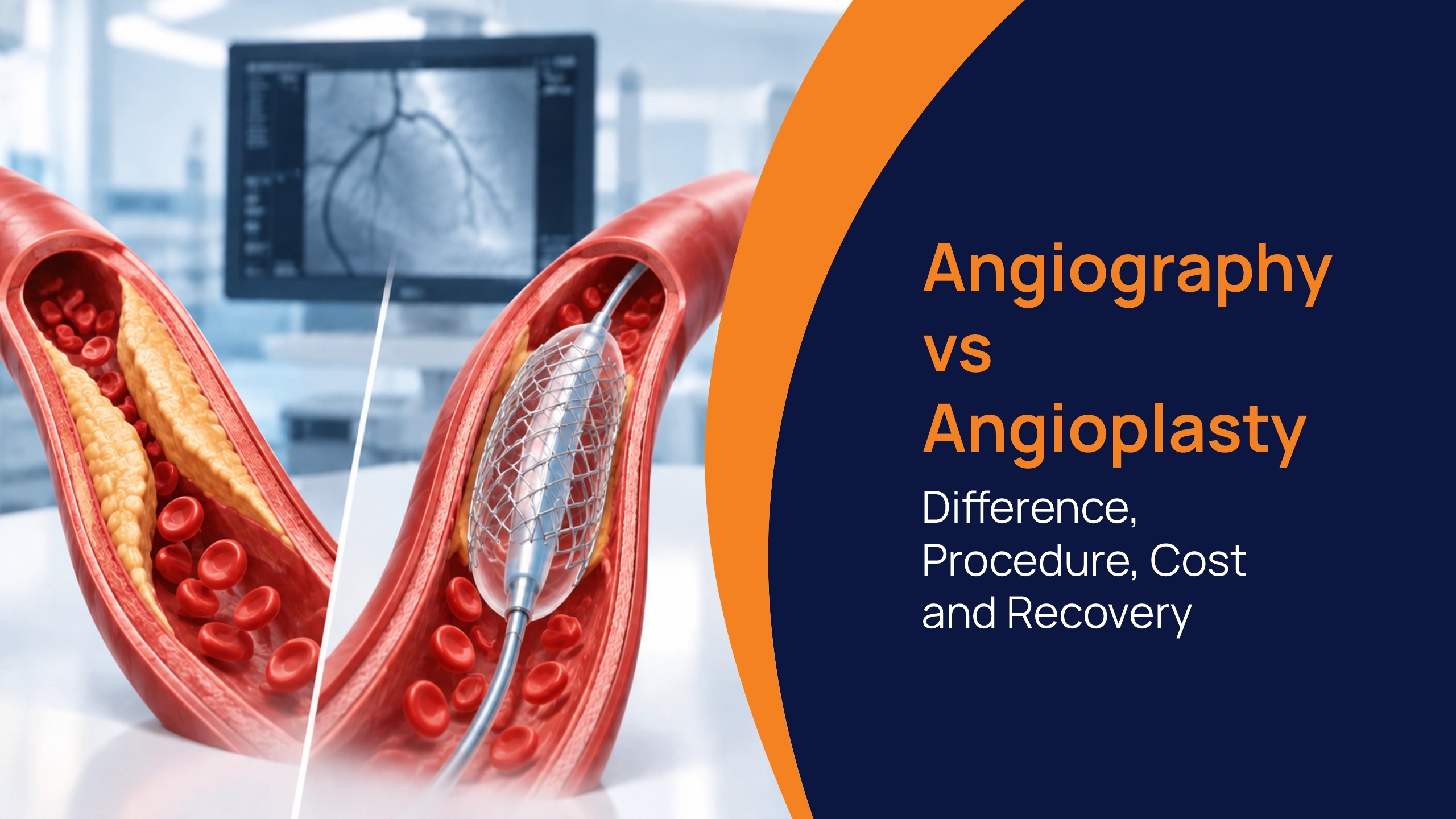
Angiography is primarily a diagnostic procedure used to identify and assess narrowing or blockages in the coronary arteries, while angioplasty is a treatment used to improve blood flow through a suitable narrowed or blocked artery. Understanding the difference between angiography vs angioplasty can help patients understand why a cardiologist may recommend one or both procedures.
In some cases, angiography and angioplasty may be performed during the same treatment session, depending on the findings and the patient’s condition.
What Is Angiography?
Coronary angiography is a diagnostic procedure used to examine the blood vessels supplying the heart. During an angiography procedure, a thin catheter is guided through a blood vessel, usually from the wrist or groin. Contrast dye is then injected so that the coronary arteries can be seen clearly on X-ray images.
Angiography can help:
- Identify coronary artery blockages
- Assess the location and severity of narrowing
- Investigate symptoms such as chest pain
- Evaluate blood flow through the coronary arteries
- Help cardiologist plan appropriate treatment
Angiography helps find and assess a blockage, but it does not usually open the artery.
What Is Angioplasty?
Coronary angioplasty is a treatment used to improve blood flow through a narrowed or blocked coronary artery. It is commonly performed as part of percutaneous coronary intervention (PCI).
During an angioplasty procedure, a small balloon is guided to the narrowed area and inflated to widen the artery. A stent may also be placed to help keep the artery open and maintain blood flow.
Angioplasty may be planned or performed as an emergency treatment during certain heart attacks.
Angiography vs Angioplasty: Key Difference
|
Feature |
Angiography |
Angioplasty |
|---|---|---|
|
Main purpose |
Diagnosis and assessment |
Treatment |
|
What it does |
Identifies and assesses blockages |
Opens a suitable narrowed or blocked artery |
|
Balloon |
Not generally used for treatment |
May be used to widen the artery |
|
Stent |
Usually not placed |
May be placed when required |
|
Main outcome |
Helps assess the condition |
Helps improve blood flow |
In simple terms, angiography helps find and assess the blockage, while angioplasty treats a suitable blockage.
How Is Angiography Performed?
The general steps involved in an angiography procedure include:
- The catheter entry site is prepared.
- Local anaesthesia is given.
- A thin catheter is inserted into a blood vessel.
- Contrast dye is injected.
- X-ray images are taken to examine the coronary arteries.
- The catheter is removed and the entry site is monitored.
The exact approach may vary depending on the patient’s condition and the cardiologist’s assessment.
How Is Angioplasty Performed?
During an angioplasty procedure:
- A catheter is guided to the narrowed or blocked artery.
- A small balloon is positioned at the affected area.
- The balloon is inflated to widen the artery.
- A stent may be placed when required.
- The catheter is removed and the patient is monitored.
In some cases, angiography and angioplasty may be performed during the same treatment session.
Is Angiography Always Followed by Angioplasty?
No. An angiogram does not automatically mean that angioplasty is required.
Depending on the findings, treatment may include medicines, lifestyle changes, angioplasty or another procedure. The cardiologist decides the appropriate heart blockage treatment based on the location and severity of the blockage, symptoms and overall health.
In many cases, coronary bypass grafting surgery is performed as per the patient’s condition and treatment options.
Angiography and Angioplasty Cost
The angiography cost and angioplasty cost can vary considerably depending on several factors.
These may include:
- Type and complexity of the procedure
- Hospital and doctor charges
- Number and type of stents, if required
- Medicines and investigations
- Length of hospital stay
- Additional procedures, if required
For an accurate estimate, patients should discuss the expected procedure, treatment requirements and package details with the hospital.
Recovery After Angiography
Recovery after diagnostic angiography is generally shorter than recovery after angioplasty. Depending on the procedure and the patient’s overall health, patients may be observed for several hours.
After discharge, follow your doctor’s advice regarding:
- Care of the catheter entry site
- Physical activity
- Medicines
- Follow-up appointments
- Warning signs that require medical attention
Your cardiologist will provide specific instructions based on your procedure and health condition.
Recovery After Angioplasty
Angioplasty recovery varies depending on the complexity of the procedure, whether a stent was placed and the patient’s overall health.
Patients may require hospital observation, prescribed cardiac medicines, temporary activity restrictions and follow-up with a cardiologist.
If a stent has been placed, do not stop prescribed medicines without medical advice, as these medicines may be important for preventing complications.
Your doctor will advise when you can gradually return to your usual activities.
When Should You See a Cardiologist?
Consult a cardiologist if you experience symptoms or have risk factors such as:
- Recurrent chest pain or pressure
- Breathlessness during activity
- Abnormal cardiac test results
- Diabetes
- Dizziness
- High blood pressure
- High cholesterol
- Previous coronary artery disease
- Family history of heart disease
Seek emergency medical attention for sudden severe chest pain, severe breathlessness, fainting or other symptoms that may indicate a medical emergency.
Angiography and Angioplasty at Terna Speciality Hospital & Research Centre
Terna Speciality Hospital & Research Centre, Navi Mumbai provides cardiac evaluation and interventional cardiology services.
Patients with suspected coronary artery disease can consult a cardiologist to understand appropriate diagnostic and treatment options, including whether angiography or angioplasty may be suitable for their condition.
The cardiology team can assess the patient’s symptoms, test results and overall health before recommending an appropriate treatment approach.
Final Takeaway
Angiography and angioplasty have different roles in cardiac care. Angiography helps diagnose and assess blockages, while angioplasty is used to improve blood flow through a suitable narrowed or blocked artery.
Understanding the difference between angiography vs angioplasty, their procedures, costs and recovery can help patients better understand the treatment recommended by their cardiologist.
If you have symptoms or have been advised to undergo cardiac evaluation, consult a qualified cardiologist for personalised medical advice.
Consult Terna Speciality Hospital & Research Centre
For concerns related to heart blockage, coronary artery disease, angiography, or angioplasty, consult the cardiology team at Terna Speciality Hospital & Research Centre, Navi Mumbai. The best heart hospital in Navi Mumbai with advanced technology treatments and procedures.
Visit the team of the best cardiologist at Terna Hospital, Navi Mumbai. Enquire now and consult our specialists.
Still have lingering questions? Let’s address the most common ones patients ask.
Is angiography the same as angioplasty?
No. Angiography is primarily a diagnostic procedure used to identify and assess blockages, while angioplasty is a treatment used to improve blood flow through a suitable narrowed or blocked artery.
Can angiography and angioplasty be done together?
Yes. In some cases, angioplasty may be performed during the same session after angiography identifies a blockage that requires treatment.
What is the recovery time after angioplasty?
Angioplasty recovery varies depending on the complexity of the procedure, whether a stent was placed and the patient’s overall health. Your cardiologist will advise when normal activities can be resumed.
What is the cost of angiography and angioplasty in Navi Mumbai?
The angiography cost and angioplasty cost depend on factors such as the type and complexity of the procedure, hospital charges, stents, medicines and length of hospital stay. Patients should obtain a personalised estimate from the hospital.
Can angiography detect a heart blockage?
Yes. Coronary angiography can identify narrowing or blockages in the arteries supplying the heart and can help doctors determine appropriate heart blockage treatment.
Disclaimer: The information provided on this blog is for general educational purposes only and should not be considered a substitute for professional medical advice, diagnosis, or treatment. Always consult a qualified healthcare professional for advice.